















With the Deepcool DM9, I’m presented with a thermal compound today that could almost be prematurely labeled as outdated due to its high zinc oxide content. At first glance, the technical data seems rather unspectacular, the packaging is plain, and the price of around 5 euros for 4 grams indicates entry-level rather than ambitious high-end, but a potential bargain. But as is so often the case, it’s worth taking a second look, because not every paste has to be a competitor product to Thermal Grizzly, Maxtor or Dow Chemical. And that’s exactly why the DM9 is worth a test today, because I also want to look for cheaper solutions.

Old-fashioned, cheap, but not so stupid
What is immediately noticeable is the amazingly low viscosity. At 50,000 cP, the paste is in a range that makes it almost foolproof to use. The paste is so smooth that you can spread it with minimal pressure without pressing half the contents of the tube into the base. For less experienced users who remove the cooler once a year and are otherwise rather inconspicuous, this is a clear plus point. This could also be useful as a short-term gap filler for components with uneven contact surfaces, at least as long as the mechanical load remains manageable. As is so often the case, the spatula and cleaning cloth are delivered free of charge.

The thermal conductivity of 6.0 W/m-K that is occasionally quoted in stores may be overambitious, but according to my measurements, this paste is not a total failure. For typical consumer CPUs, such as a Ryzen 5 or Core i5 without great overclocking ambitions, this is easily sufficient. In the GPU segment, however, things look a little more critical, especially if vertical installations, high thermal cycles or long full load phases are to be expected. Due to its design, the paste tends to “flow away” and bleed rather than provide lasting structural stability under stress. Oil separation in the edge area cannot be ruled out at unfavorable temperatures.
Electrically non-conductive, non-capacitive, so no risk of short circuits or leakage currents if applied incorrectly. Operating temperatures are specified as -50 °C to 250 °C, which sounds solid on paper, but does not provide any information about long-term behavior under high alternating loads. Deepcool has deliberately opted for a robust, simple recipe that should be able to do one thing above all: work. And it does, as long as you don’t expect miracles. The DM9 is therefore definitely not for enthusiasts, but it is certainly an alternative for anyone looking for an uncomplicated, inexpensive and safe product. Horst-Kevin, who wants to breathe new life into his Ryzen 5 under an inexpensive air cooler, should be quite happy with it, because not everyone really needs high-end.

That’s exactly why I’ve chosen this paste today. Not because it changes the market or sets records, but because it is representative of an entire segment of products that is often overlooked in the shadow of the performance elite – but fulfills a practical purpose. And that is sometimes more than some expensive representatives of the upper class can afford.
| Test setup and methods | Material analysis and microscopy | Basic knowledge |
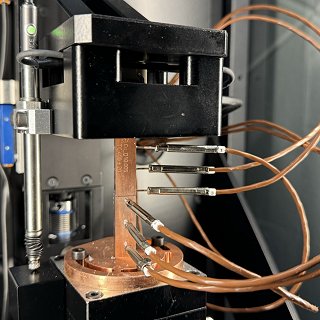 Here you can find out why effective thermal conductivity and bulk thermal conductivity can be completely different in practice, what role the contact resistance between the surfaces and the paste plays and how thermal compound can be measured precisely. There is also a detailed description of the equipment, the methodology and the error tolerances. Here you can find out why effective thermal conductivity and bulk thermal conductivity can be completely different in practice, what role the contact resistance between the surfaces and the paste plays and how thermal compound can be measured precisely. There is also a detailed description of the equipment, the methodology and the error tolerances. |
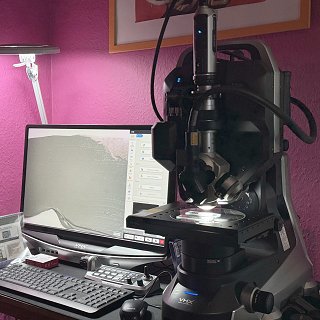 You will learn how laser-induced plasma spectroscopy works and the advantages and limitations of the measurements. There is also high-resolution digital microscopy and analysis of particle sizes. This information is also used to estimate the long-term stability of a paste. You will learn how laser-induced plasma spectroscopy works and the advantages and limitations of the measurements. There is also high-resolution digital microscopy and analysis of particle sizes. This information is also used to estimate the long-term stability of a paste. |
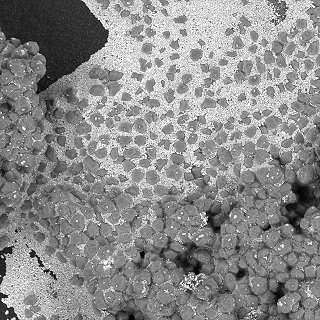 Anyone who has always wanted to know what is or is not in a paste and how these pastes are produced will find what they are looking for here. The basic article provides a better understanding of what is often sold for far too much money and sometimes with adventurous promises. Anyone who has always wanted to know what is or is not in a paste and how these pastes are produced will find what they are looking for here. The basic article provides a better understanding of what is often sold for far too much money and sometimes with adventurous promises. |

DeepCool DM9 Wärmeleitpaste, 1.5g (R-DM9-GY015C-G)
 | lagernd | 5,90 €*Stand: 23.12.25 04:31 |
 | Verfügbar - 4-6 Werktage Lieferzeit | 8,51 €*Stand: 23.12.25 07:43 |
 | lagernd, 24-h Service möglich | 13,95 €*Stand: 23.12.25 07:51 |
DeepCool DM9 Wärmeleitpaste, 4g (R-DM9-GY040C-G)
| Verfügbar - 4-6 Werktage Lieferzeit | 12,15 €*Stand: 23.12.25 07:43 |












7 Antworten
Kommentar
Lade neue Kommentare
Veteran
1
Veteran
Urgestein
Moderator
Urgestein
1
Alle Kommentare lesen unter igor´sLAB Community →