
















Test setup
For the test system, AMD Ryzen 9800X3D is used on an MSI MAG X870E Carbon WiFi with 2x 16 GB T-Force Delta RGB DDR5 6000 (32 GB kit) @CL30 as well as a TB MSI Spatium M480 Pro and an M580 4TB. The whole thing is powered by a Be Quiet! Dark Power Pro 13 1600 Watt. A semi-custom water cooler from Alphacool in the form of the Eiswolf Extreme ensures a cool CPU.

I have been using an Optris Pi640 for the heat flow analyses and infrared images / radiometric videos for the non-contact measurements for years and because I had to change the system, I usually use the “old” T70 benchtable from Lian Li with special foil and cover), which I can also close like a PC case. The Pi640 is an industrial camera with interchangeable lenses, various additional parts and functional software. With a full 640 x 480 measuring pixels, the bolometer for capturing thermal radiation is already as large as a normal VGA camera, which is interpolated into the image for optical enhancement in many cheaper devices. Not much more is currently possible. The videos are recorded at up to 30 FPS (Hz), which is also in a class of its own.

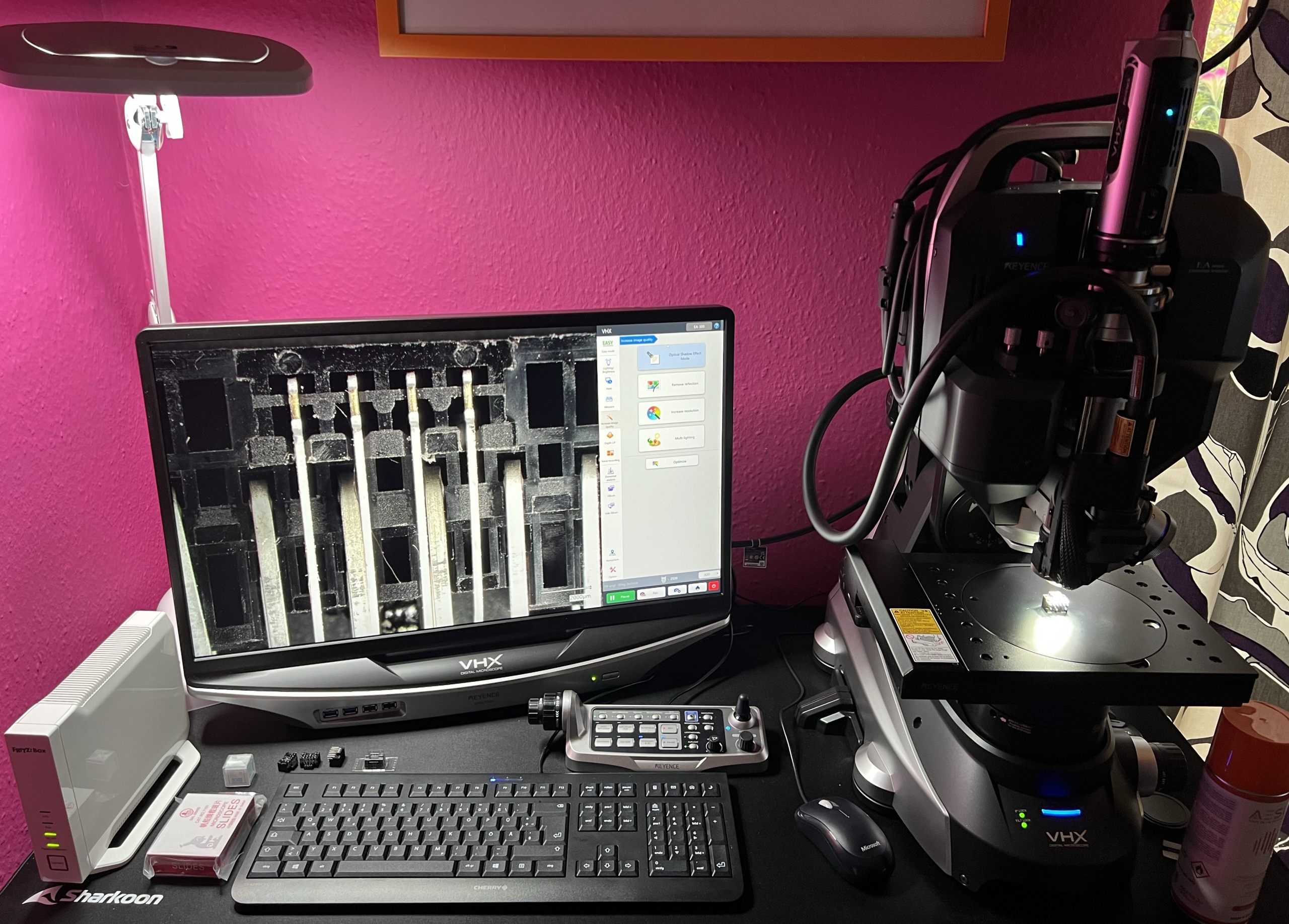
The Keyence VHX-7000 system with coupled AE-300 from my own laboratory is a versatile 3D profilometer and the powerful microscope (max. x2000) with HDR function, automated lighting scenarios and huge depth of field can also be used perfectly for such examinations. It can also be used for material analysis, for which I don’t have to use an expensive SEM EDX. Vacuum? I no longer need it and it saves a lot of time. As long as you know what you’re getting into and what the limits of the method you’re using are, it works really well. That’s exactly what we need today.
I test the heat conducting materials with my TIMA5 on a real industry standard. Here are the links for further information:
| TIM measurements |
Material analysis and microscopy |
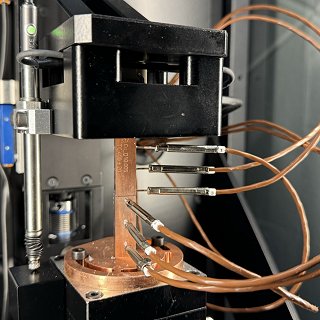 Here you can find out why effective thermal conductivity and bulk thermal conductivity can be completely different in practice, what role the contact resistance between the surfaces and the paste plays and how thermal paste can be measured precisely. There is also a detailed description of the equipment, the methodology and the error tolerances. Here you can find out why effective thermal conductivity and bulk thermal conductivity can be completely different in practice, what role the contact resistance between the surfaces and the paste plays and how thermal paste can be measured precisely. There is also a detailed description of the equipment, the methodology and the error tolerances. |
 You will learn how laser-induced plasma spectroscopy works and the advantages and limitations of the measurements. There is also high-resolution digital microscopy and analysis of particle sizes. This information is also used to estimate the long-term consistency of a paste. You will learn how laser-induced plasma spectroscopy works and the advantages and limitations of the measurements. There is also high-resolution digital microscopy and analysis of particle sizes. This information is also used to estimate the long-term consistency of a paste. |
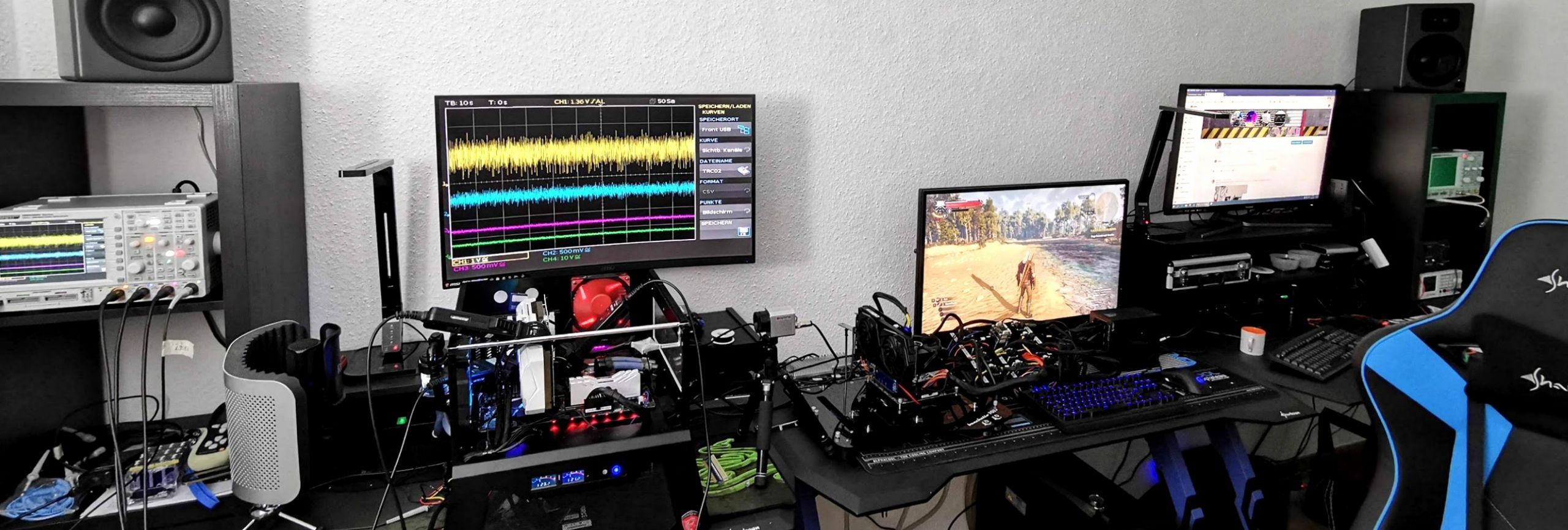
However, the measurement of detailed power consumption and other, more in-depth things is carried out in the lab using two different methods: high-resolution oscilloscope technology and the self-created, MCU-based measurement setup for motherboards and graphics cards (pictures below) and NVIDIA’s PCAT. Of course, I use a redundant system with the same components because such measurements are rather difficult in the case.
The audio measurements are carried out outside in my chamber (room within a room).
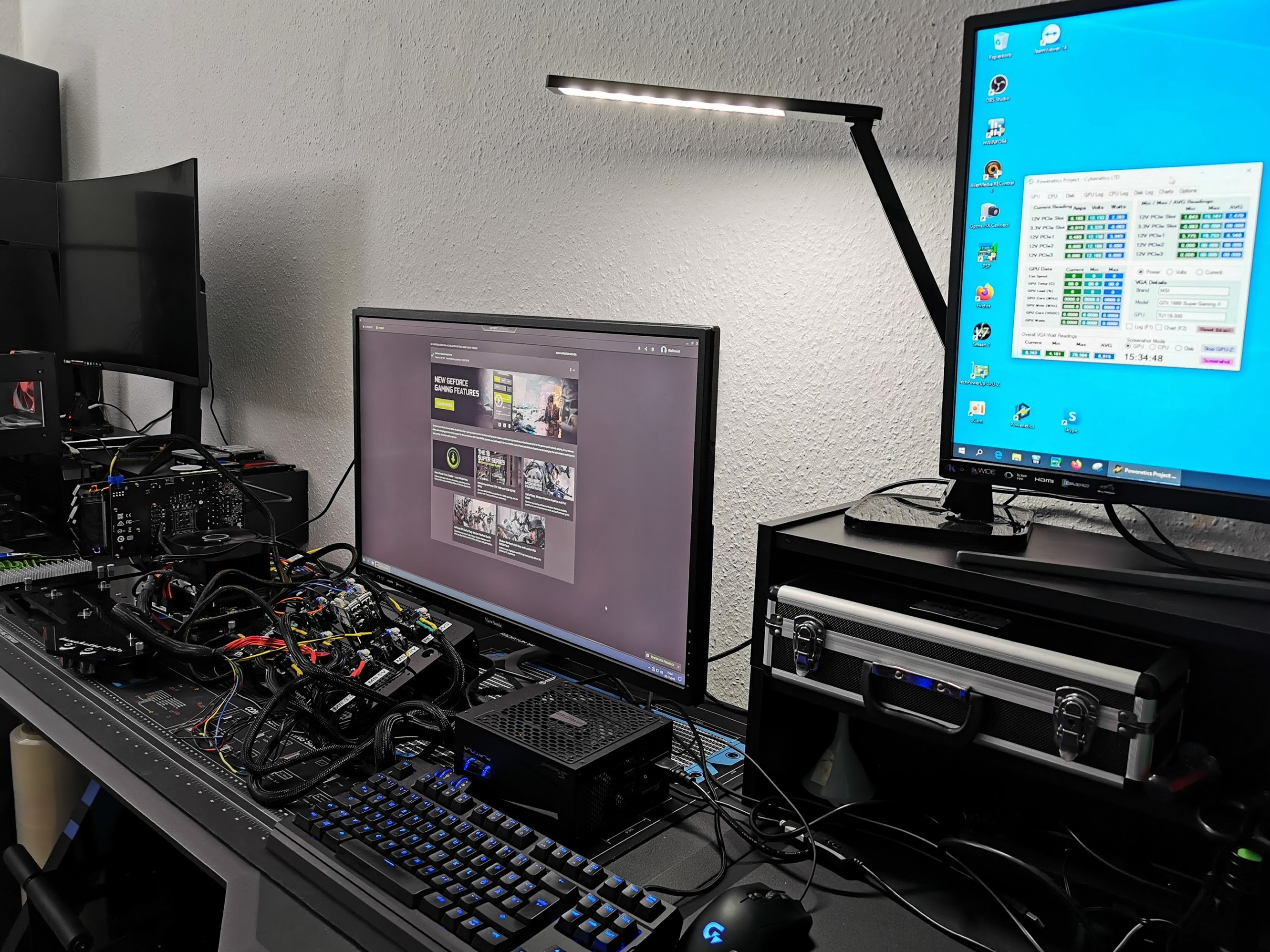

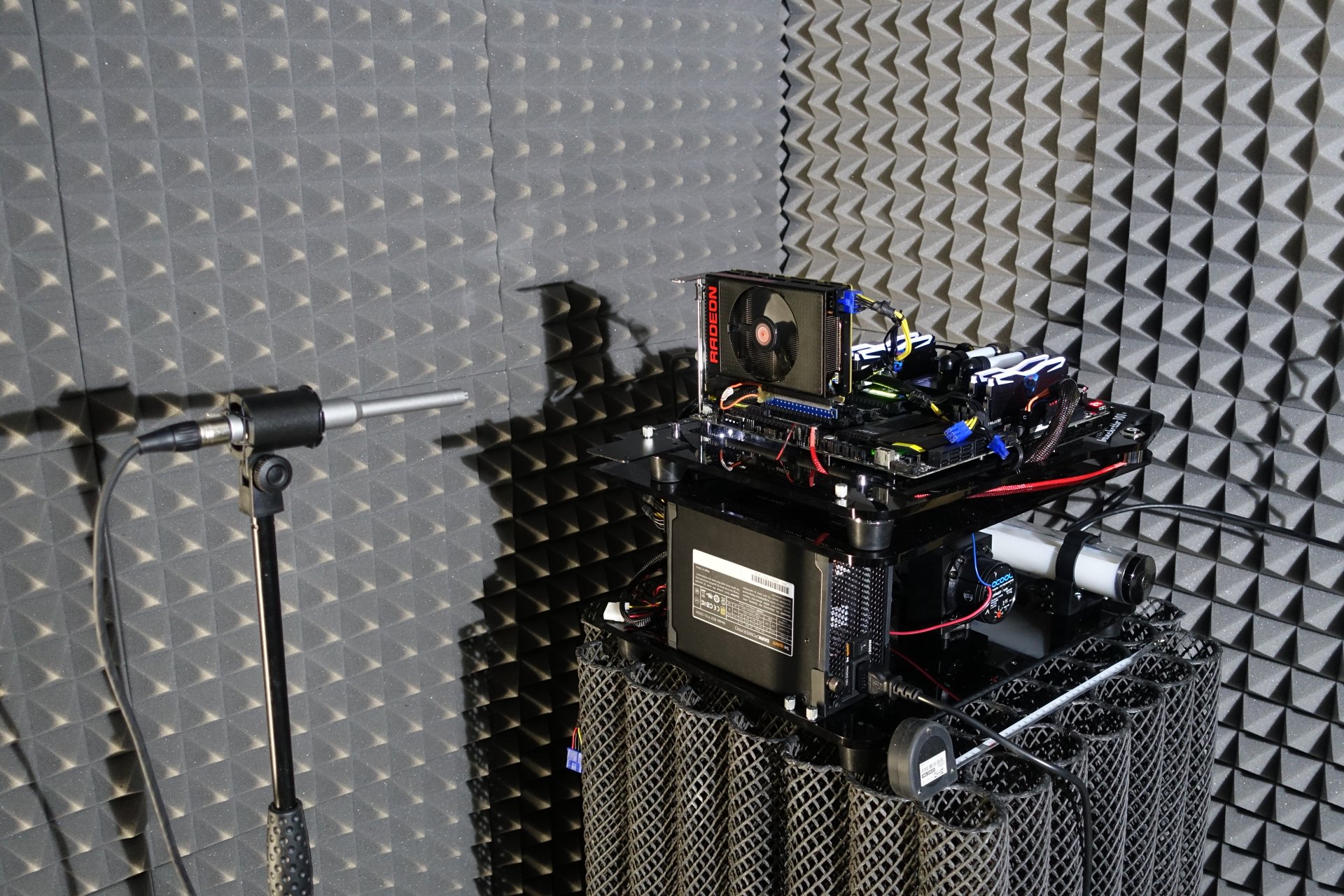
I have also summarized the individual components of the test system in a table:
| Test System and Equipment |
|
|---|---|
| Hardware: |
Ryzen 7 9800X3D MSI MAG X870E Carbon WiFi 2x 16 GB T-Force Delta RGB DDR5 6000 (32 GB Kit) @CL30 1x 2 TB MSI Spatium M480 Pro, 1x M580 4TB Be Quiet! Dark Power Pro 13 1600 Watt |
| Cooling: |
Semi-Custom Water Cooler Alphacool Eiswolf Extreme DOWSIL TC-5550 |
| Case: |
Raijintek Paean |
| Monitor: | LG OLED55 G19LA, TCL 42″ UltraHD |
| Power Consumption: |
MCU-based shunt measuring (own build, Powenetics software) Up to 10 channels (max. 100 values per second) Special riser card with shunts for the PCIe x16 Slot (PEG) NVIDIA PCAT and FrameView |
| Microscope / Laser: |
Laser-induced breakdown spectroscopy (LIBS) Keyence VHX-7000 and AE-300 |
| TIM Testing: |
Nanotest TIMA5 Thermal Material Analyzer |
| Thermal Imager: |
Optris PI640 Pix Connect Software Type K Class 1 thermal sensors (up to 4 channels) |
| Acoustics: |
NTI Audio M2211 (with calibration file) Steinberg UR12 (with phantom power for the microphones) Creative X7, Smaart v.7 Own anechoic chamber, 3.5 x 1.8 x 2.2 m (LxDxH) Axial measurements, perpendicular to the center of the sound source(s), measuring distance 50 cm Noise emission in dBA (slow) as RTA measurement Frequency spectrum as graphic |
| OS/UEFI: | Windows 11 Pro (all updates/patches, current certified drivers), “Best performance” |

- 1 - Introduction, unboxing and technical data
- 2 - Test system and equipment
- 3 - Teardown: PCB, topology and components
- 4 - Teardown: Cooling solution
- 5 - Teardown: Material analysis and ASTM TIM testing
- 6 - Autodesk AutoCAD
- 7 - Autodesk Inventor Pro
- 8 - PTC Creo
- 9 - Dassault Systèmes Solidworks
- 10 - Autodesk Maya
- 11 - SPECviewperf 15 (2025)
- 12 - Adobe Photoshop 26.10
- 13 - Adobe After Effects 2025
- 14 - Adobe Premiere Pro 25.41
- 15 - AI Benchmarks (AI Vision, Image, Text)
- 16 - Rendering
- 17 - Temperatues, clock rates, power draw and fan speed
- 18 - Summary and conclusion







32 Antworten
Kommentar
Lade neue Kommentare
Urgestein
Veteran
1
Urgestein
1
Urgestein
1
1
Urgestein
1
Urgestein
1
Urgestein
1
Urgestein
Urgestein
Urgestein
Veteran
1
Alle Kommentare lesen unter igor´sLAB Community →