















Today I’m testing the Shin Etsu MicroSi X-23-7921-5 , the MicroSi X-23-7783D and the MicroSi G7762. Once again, my thanks go to the community for the kind procurement. All three pastes are actually not that bad, but they show the typical problem when the manufacturer tries to generate great values. That’s why I’m using the whole thing today as an example to show that the reality is quite different if you want to cool GPUs or CPUs as well as possible.

Problem and explanation
Thermal conductive pastes with nominally high thermal conductivities often use large thermal conductive particles, such as aluminum oxide. These particles are often superior to finer variants in terms of their conductivity, but their physical properties also result in specific disadvantages, particularly in applications on flat and sensitive surfaces such as those of CPUs and GPUs. A key aspect here is the so-called “Bond Line Thickness” (BLT), i.e. the effective layer thickness of the thermal compound between the heat spreader (IHS) and the cooler base.
Ideally, this should be as low as possible in order to minimize heat transfer resistance. However, large particles often prevent a sufficiently thin layer from being achieved, as they force a certain minimum thickness: They act as spacers, so to speak. Even with high contact pressure, a layer thickness of well over 25 µm often remains, which can already lead to a significant deterioration in thermal performance.
In addition, high mechanical pressures are required in order to achieve anything approaching a low BLT. This can be particularly problematic for sensitive structures such as many modern GPUs. These often have unprotected dies or very asymmetrical cooling solutions, where excessive force can lead to stresses or even physical damage. Even with CPUs with IHS, high contact pressure can lead to mechanical deformation of the substrate or micro-cracks in the solder under the die, especially with repeated assembly.
Another problem is the uniform distribution of such pastes. Large particles tend to spread unevenly during application or under pressure, which can lead to local thickness variations and air pockets. The latter have a strong heat-insulating effect and additionally worsen the thermal behavior, even if the paste itself has a high nominal conductance. In comparison, pastes with finer particles and better dispersion often perform better in practice despite a lower theoretical thermal conductivity value, as they allow a thinner, more homogeneous and mechanically more compatible layer. The effective thermal conductivity in real contact is therefore often higher, although the material value of the paste itself is lower.
Today, of course, I also want to show that an evaluation of thermal pastes based purely on the nominal thermal conductivity falls short. The particle size, the resulting minimum possible BLT and the mechanical requirements of the application play a central role and can lead to suboptimal results in practice, even with theoretically excellent pastes. This is exactly what we are dealing with today.
Shin Etsu MicroSi X-23-7921-5, MicroSi X-23-7783D and the MicroSi G7762
The X-23-7921-5 has a viscosity of 360 pascal-seconds at 25 °C and a specific density of 2.8. Its thermal conductivity is 6.0 W/m-K, and the thermal resistance is 5.0 mm²-K/W. At a contact pressure of 20 psi, it achieves a bond line thickness (BLT) of 25 µm. This paste is particularly suitable for applications where a thin layer and low thermal resistance are required.

The X-23-7783D, on the other hand, has a lower viscosity of 200 Pa-s at 25 °C and a specific density of 2.6. It also offers a thermal conductivity of 6.0 W/m-K, but its thermal resistance is 7.3 mm²-K/W. The BLT here is 25 µm at 20 psi. Due to its lower viscosity, this paste is easier to apply, which makes it ideal for applications where ease of application is paramount.

Specific technical data on G7762 is less accessible. However, it is frequently used in server technology, which indicates its suitability for applications with high thermal requirements.

In general, however, if excessively large particles are used in a thermal paste, as is the case here with all three pastes, this results in several unfavorable physical effects that impair the thermal transition between the semiconductor component to be cooled (e.g. a CPU or GPU) and the heat sink. This is mainly due to the geometry of the particles, their interaction with the matrix of the paste and the mechanical properties of the interfaces. Firstly, large particles cause an increase in the minimum achievable layer thickness (bond line thickness, BLT).
Since a particle with a diameter of 15 µm, for example, cannot be fully compressed, a minimum layer is maintained even under considerable contact pressure, which is determined by the largest particle diameter. This reduces the effective thermal conductivity of the system, as the heat has to be transported over a greater distance through a heterogeneous material. This layer contains not only the highly conductive solid particles, but also the surrounding matrix, which is comparatively poorly conductive. But what does this mean in practice?
| Test setup and methods | Material analysis and microscopy | Basic knowledge |
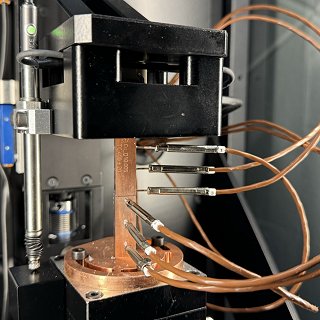 Here you can find out why effective thermal conductivity and bulk thermal conductivity can be completely different in practice, what role the contact resistance between the surfaces and the paste plays and how thermal compound can be measured precisely. There is also a detailed description of the equipment, the methodology and the error tolerances. Here you can find out why effective thermal conductivity and bulk thermal conductivity can be completely different in practice, what role the contact resistance between the surfaces and the paste plays and how thermal compound can be measured precisely. There is also a detailed description of the equipment, the methodology and the error tolerances. |
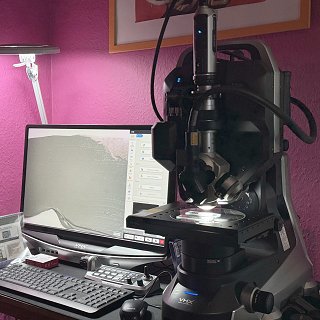 You will learn how laser-induced plasma spectroscopy works and the advantages and limitations of the measurements. There is also high-resolution digital microscopy and analysis of particle sizes. This information is also used to estimate the long-term stability of a paste. You will learn how laser-induced plasma spectroscopy works and the advantages and limitations of the measurements. There is also high-resolution digital microscopy and analysis of particle sizes. This information is also used to estimate the long-term stability of a paste. |
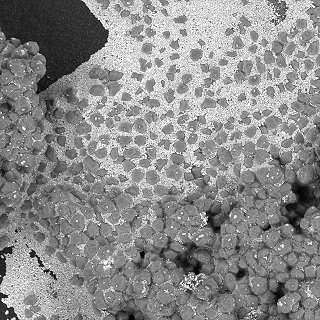 Anyone who has always wanted to know what is or is not in a paste and how these pastes are produced will find what they are looking for here. The basic article provides a better understanding of what is often sold for far too much money and sometimes with adventurous promises. Anyone who has always wanted to know what is or is not in a paste and how these pastes are produced will find what they are looking for here. The basic article provides a better understanding of what is often sold for far too much money and sometimes with adventurous promises. |














16 Antworten
Kommentar
Lade neue Kommentare
Veteran
Mitglied
Urgestein
Veteran
Neuling
1
Veteran
1
Veteran
1
Veteran
1
Veteran
Veteran
1
Veteran
Alle Kommentare lesen unter igor´sLAB Community →