















The Galax RTX 5070 Ti Hall of Fame is anything but an ordinary graphics card. From the very first glance at the board, it is clear that this is not just a 5070 Ti, but a PCB that is more reminiscent of the upper class in terms of its dimensions and design. In fact, the PCB is so generously dimensioned that it can almost be described as completely oversized – and that is not even meant in a negative way. On the contrary, this massive design brings advantages in terms of voltage stability, thermal load capacity and potential overclocking reserves.
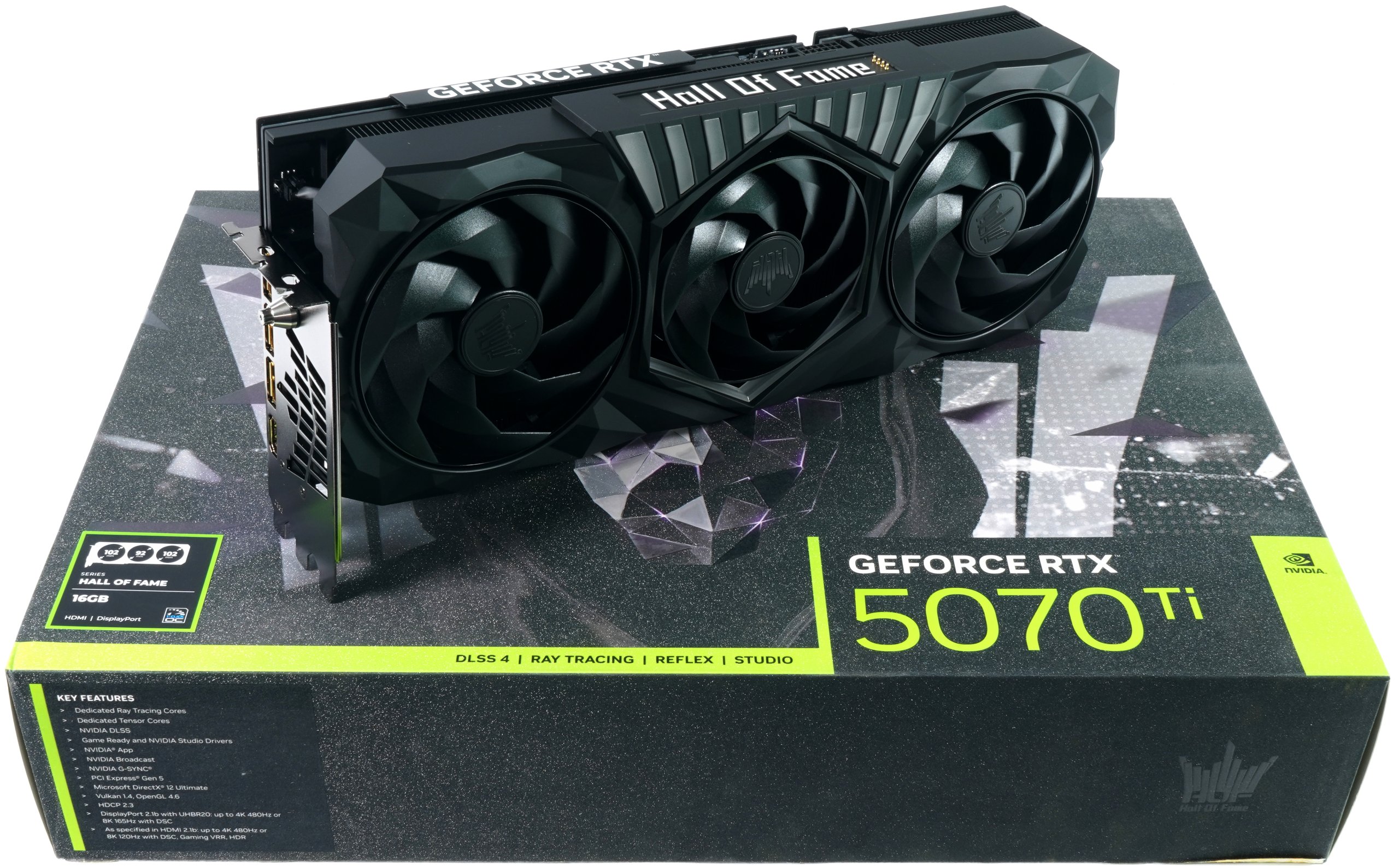
The component assembly is particularly striking and clearly stands out from all the competition. The power supply is not only generously dimensioned in terms of numbers, but is also equipped with components that are otherwise not found in this form in the 5070-Ti class or among the competition. It is precisely this point that poses a certain challenge for a fair classification, as the card plays at a technical level that is more in the direction of high-end designs such as an RTX 5080. The crucial question now is: can this exceptionally elaborately designed RTX 5070 Ti actually come close to the “normal” RTX 5080, or is it perhaps just enough to lovingly polish its taillights from afar with an arm extension? That’s exactly what I want to find out today, and because this board has so many exciting technical features, I’m going to devote a lot of space to it in this review.
Galax sells its graphics cards in Europe under the KFA2 brand because the names Galaxy and Galax could conflict with prior rights in the European trademark space, therefore distribution proceeds under the established secondary brand to ensure legal certainty, the products are technically identical and this is merely a different branding strategy. In today’s English-language article I use the name Galax for better international recognition, however the charts are labeled KFA2 because Galax insists on the use of the KFA2 brand for publications within the EU.
The Galax RTX 5070 Ti Hall of Fame in detail
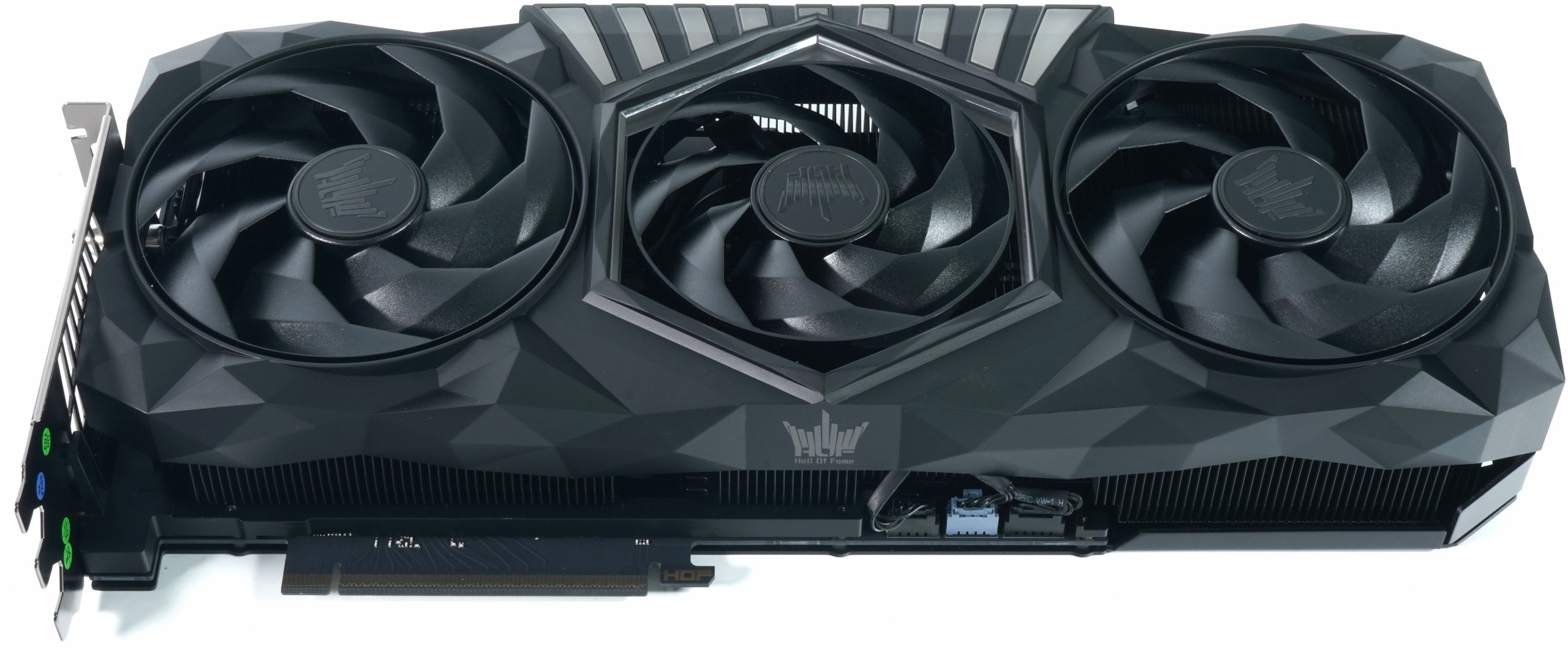
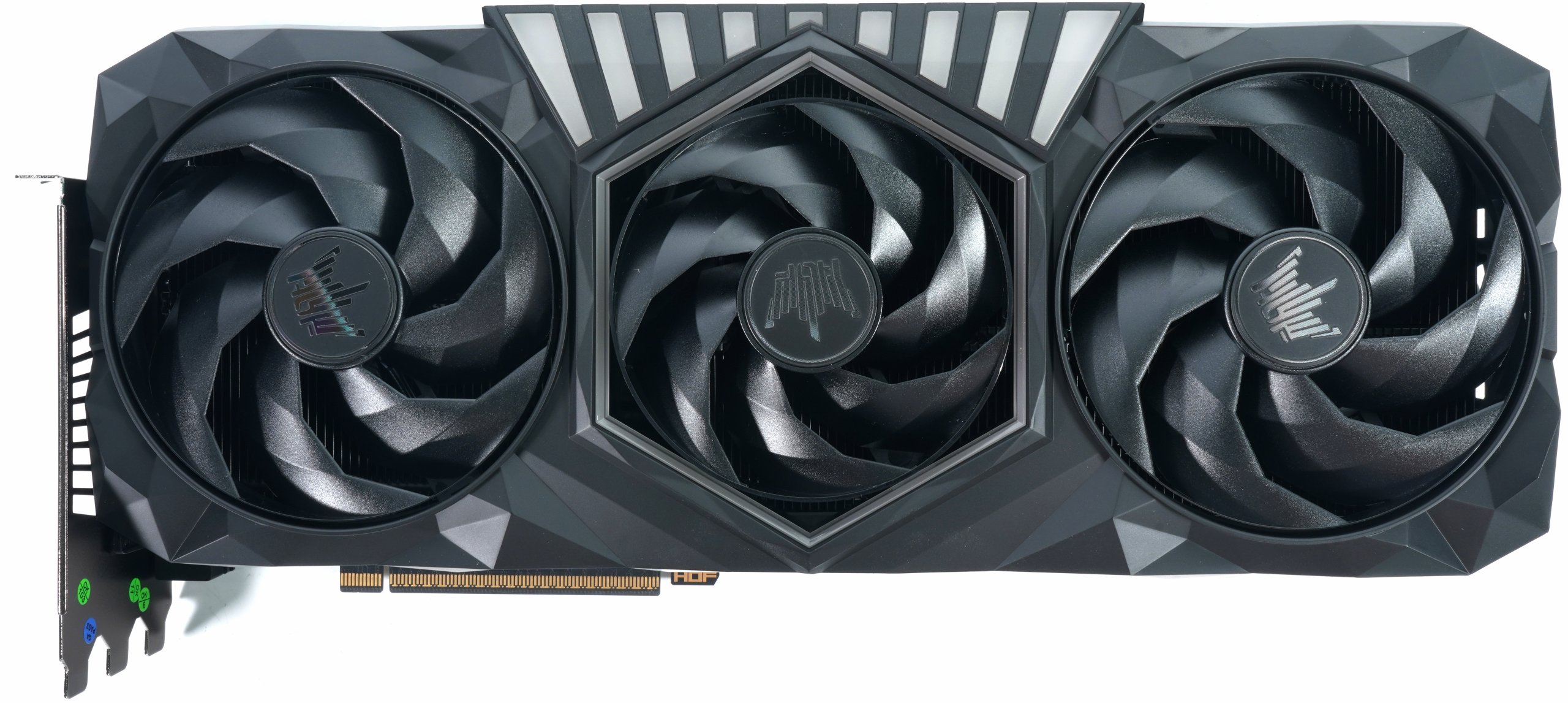
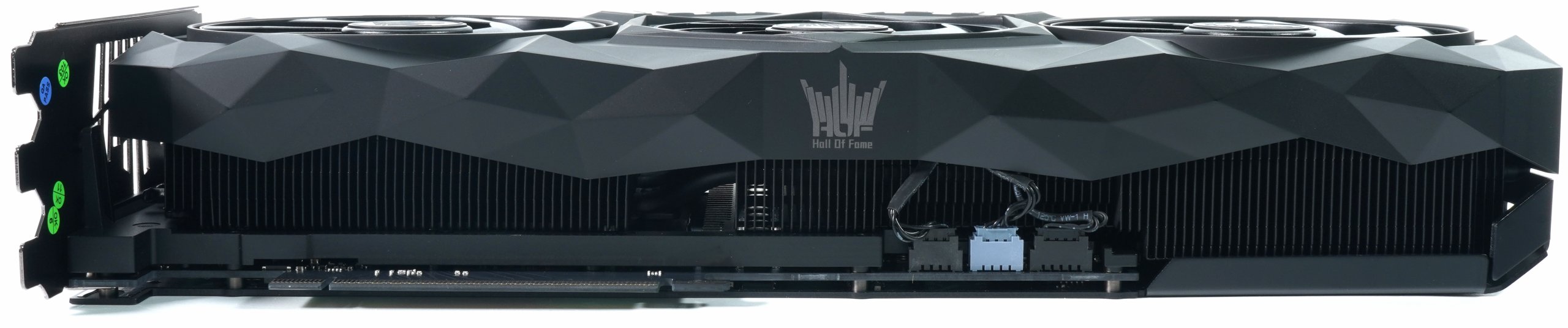
When unpacking the Galax RTX 5070 Ti Hall of Fame, it immediately becomes clear that this is no ordinary graphics card. With its striking, faceted shape, the housing almost looks like a sculpture in which technology and design are seamlessly intertwined. The front is dominated by two external 100-millimeter fans and a centrally positioned 90-millimeter fan, which are part of the WINGS 3.0 cooling system.
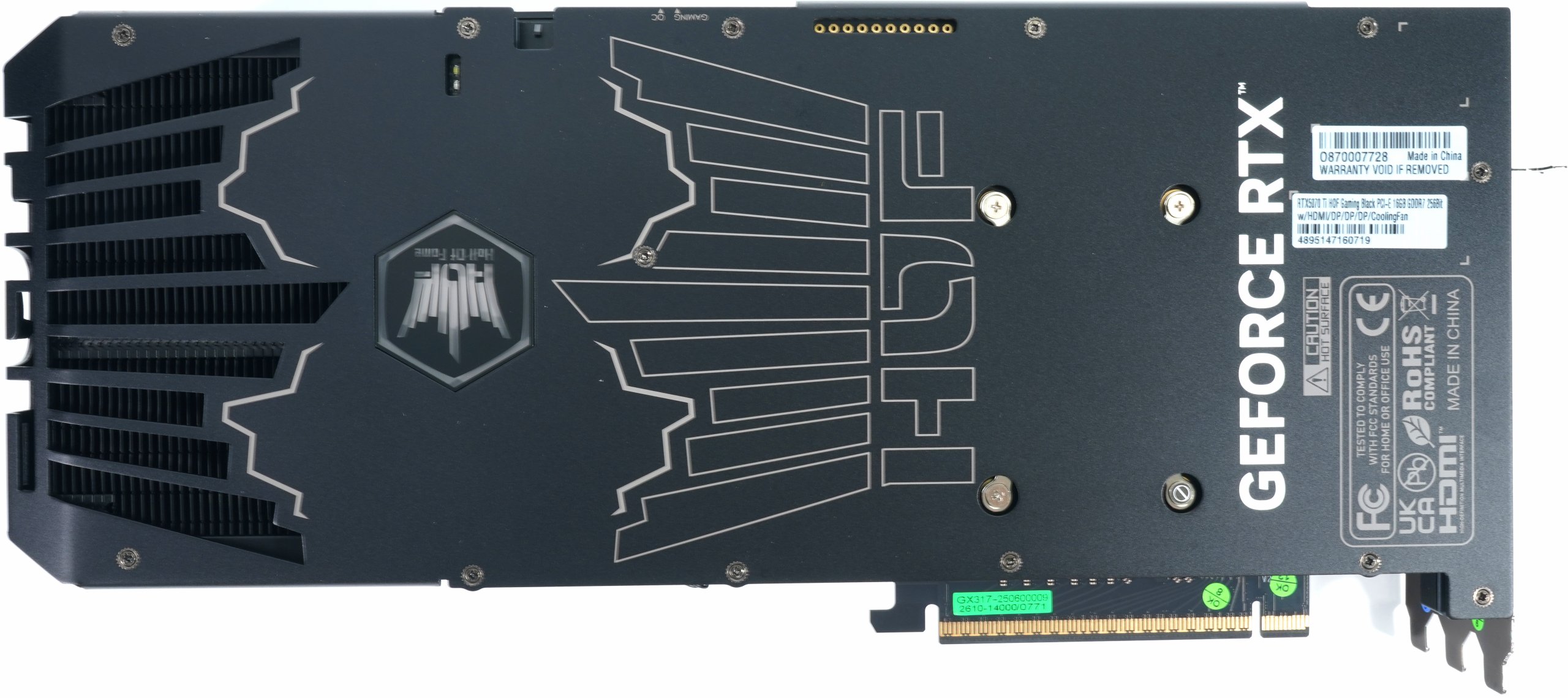
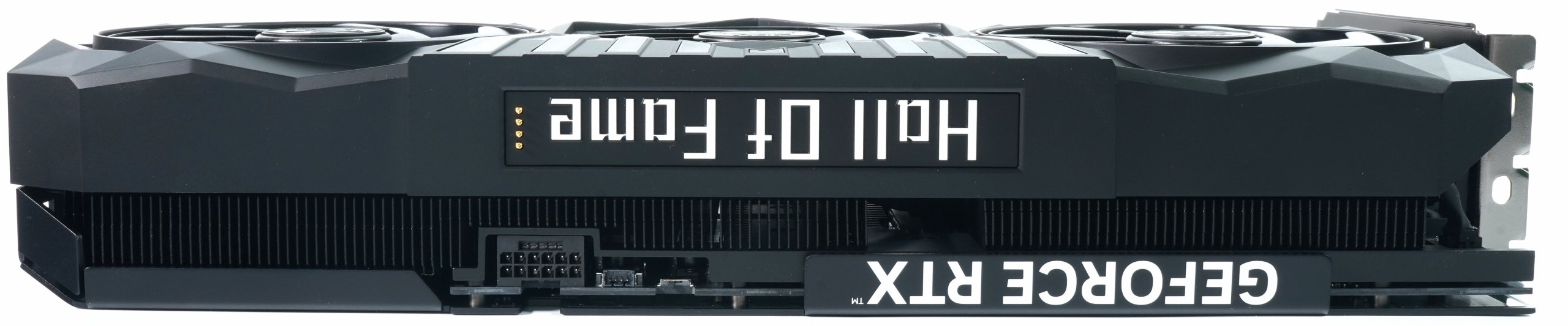
The rear is protected by a sturdy metal backplate, which not only serves as an optical element, but also stabilizes the cooler mechanically. An illuminated Hall-of-Fame logo sits in the middle, which, together with other ARGB elements on the top of the card, creates a striking appearance. The GeForce RTX lettering on the side is also illuminated and underlines the premium character. With a length of around 354 millimetres including the slot bracket, a width of around 160 millimetres and a height of 66.7 millimetres, the card occupies three slots and weighs a considerable amount, which is due to the massive cooling design.
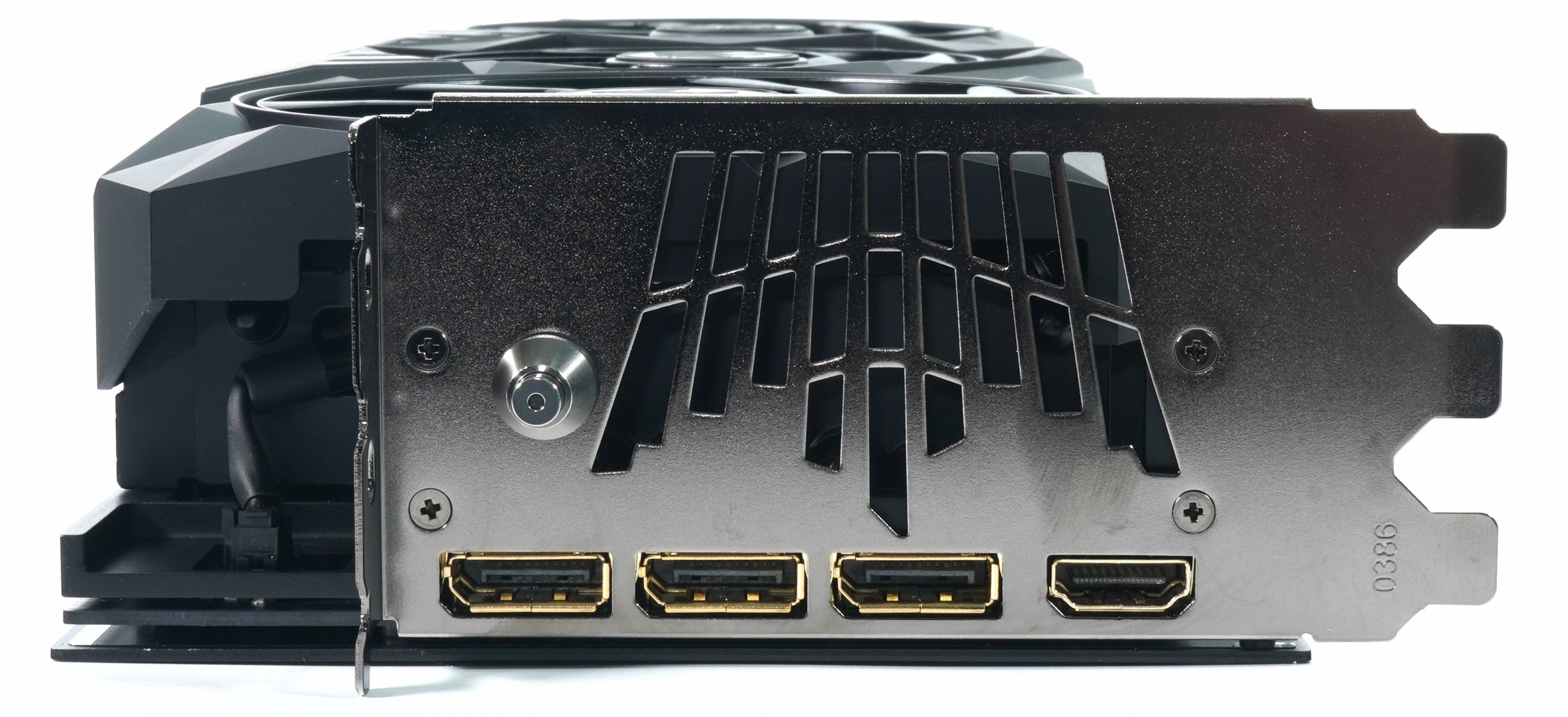
The slot cover is made of solid metal, is generously equipped with ventilation openings and houses a mechanical switch with which the fan mode can be switched directly from automatic control to full speed. The connection equipment includes three DisplayPort 2.1b and one HDMI 2.1b output, making the card ideally equipped for current and future monitor generations. The DisplayPort 2.1b connections support resolutions of up to 8K at 165 Hz or 4K at 480 Hz, while the HDMI 2.1b connection enables resolutions of up to 8K at 60 Hz or 4K at 120 Hz. These versatile connection options ensure a flexible and powerful connection to different display setups.
In terms of technology, the Galax RTX 5070 Ti Hall of Fame is based on NVIDIA’s Blackwell architecture and the GB203-300-A1 graphics processor, which is manufactured in 4-nanometer production. This chip integrates 8960 CUDA cores, which work with a base clock of 2.30 gigahertz and can reach up to 2.61 gigahertz in boost mode. The GDDR7 memory is generously dimensioned at 16 gigabytes, operates at an effective speed of 28 gigabits per second and is connected via a 256-bit interface, resulting in a memory bandwidth of 960 gigabytes per second. The architecture is complemented by fourth-generation ray tracing cores and fifth-generation tensor cores, which accelerate both AI-supported calculations and real-time ray tracing.
Power is supplied via a native PCIe Gen5 16-pin connector; alternatively, an adapter to three 8-pin connectors can be used. In its entirety, the Galax RTX 5070 Ti Hall of Fame looks like a composition of an oversized hardware base and carefully staged look, which gives the impression from the very first glance that there are performance reserves here that can only be found in the more expensive models in this GPU class.
Unfortunately, you have to overclock and increase the power limit yourself if you think you need to. After all, the card still offers a maximum of 300 watts instead of the preset 250 watts and you can still experiment with the current MSI Afterburner or the Galax software, because the 3 GHz are certainly possible or almost possible, depending on the chip.
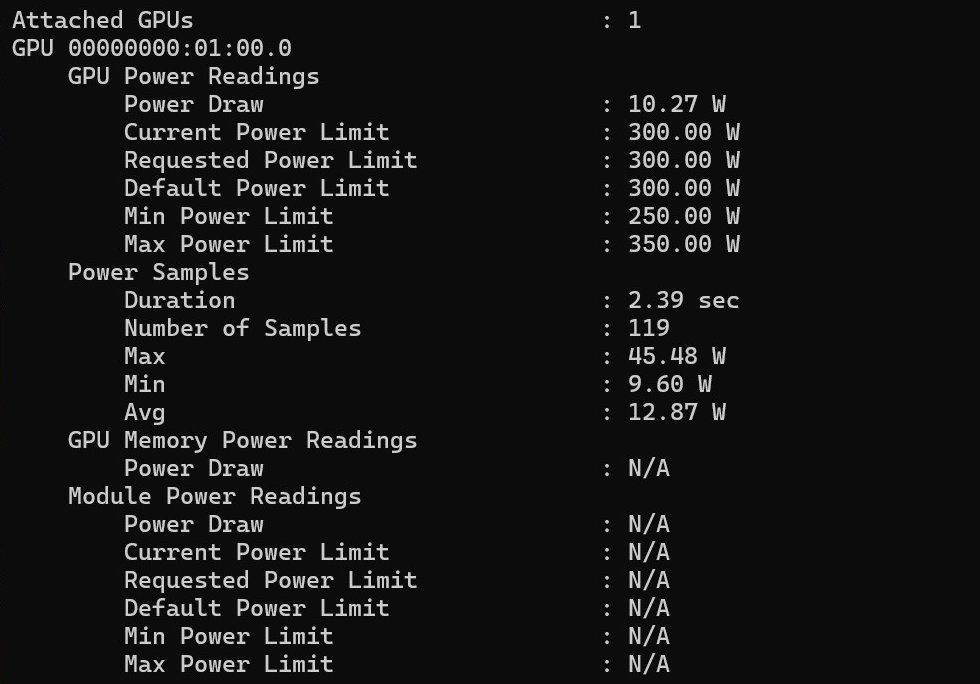
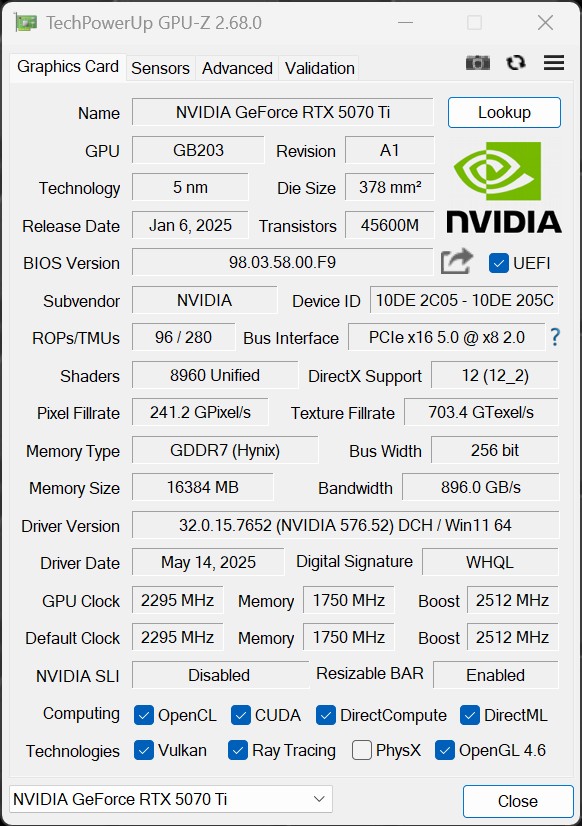
The two BIOS options of the Galax RTX 5070 Ti Hall of Fame differ less in their power enablement than in the way the GPU frequencies are explored. Both variants work with the same power target of 300 watts, which can be varied between 250 and 350 watts. The power consumption is therefore limited identically, regardless of whether the gaming or OC BIOS is active. The difference can be seen in the clock frequencies. The gaming BIOS works with a boost clock of 2512 MHz, while the OC BIOS raises the boost clock to 2610 MHz. The GPU base frequency is the same in both modes at 2295 MHz, as is the memory clock at 1750 MHz (effectively 28 Gbps). The deviation therefore does not affect the basic parameters of the chip, but is due to an additional clock offset that is automatically activated by the OC BIOS. This offset explains the higher boost clock without having to make any changes to the power target or the fan characteristics.
 |
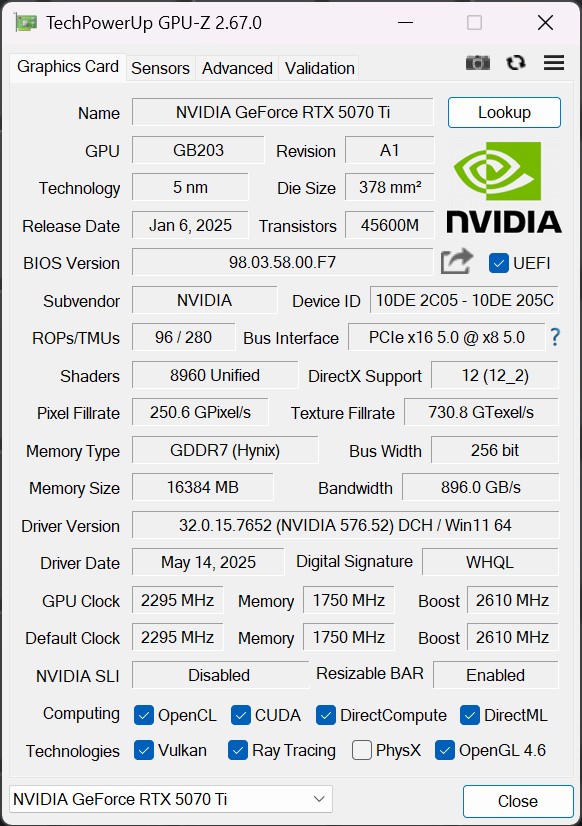 |
The “mysterious offset” is therefore not a classic overvolting or an increase in the power limit, but a permanently programmed clock increase that enables more performance under the same conditions. In practice, this means that the card simply holds higher clock rates longer and more stably in the OC BIOS as long as the power target is not reached. The difference in the effective clock margin is therefore particularly noticeable in GPU-limited scenarios without fundamentally changing the behavior of the card in terms of power consumption or noise development.

- 1 - Introduction, overview and technical specifications
- 2 - Test system and equipment
- 3 - Teardown: PCB and components
- 4 - Teardown: Cooling system
- 5 - Teardown: Material analysis and TIM
- 6 - Benchmarks: gaming performance
- 7 - Power consumption, transients, PSU recommendation
- 8 - Clock rates and overclocking
- 9 - Temperatures and thermal imaging
- 10 - Fan curves and noise with audio samples
- 11 - Summary and conclusion





















32 Antworten
Kommentar
Lade neue Kommentare
Veteran
Moderator
Veteran
Veteran
1
Mitglied
1
Urgestein
Veteran
Mitglied
1
Urgestein
Urgestein
1
Urgestein
1
Urgestein
Urgestein
1
Alle Kommentare lesen unter igor´sLAB Community →