















There are products that are not so much a response to a gap in the market, but rather the result of a collective failure that created the need in the first place. This is where the aqua computer AMPINEL comes into play, the ultimate solution to a problem that NVIDIA, together with the PCI SIG and its usual partners, initially created for itself in a mixture of ignorance and arrogance. Because ever since Jensen hurled his infamous power whip and the puny connector into world history, we all know what job creation measures really mean: they don’t create jobs, they create entire industries. Without the disasters of this unfortunate connector, there would never have been so many third-party suppliers to fill their coffers with adapter solutions, monitoring systems or simply overpriced cables. And let’s be honest, people like me can almost be grateful for these dramas, because without this plug tragedy, many a summer hole in the news landscape would simply not have been filled and many a video would probably never have been made.
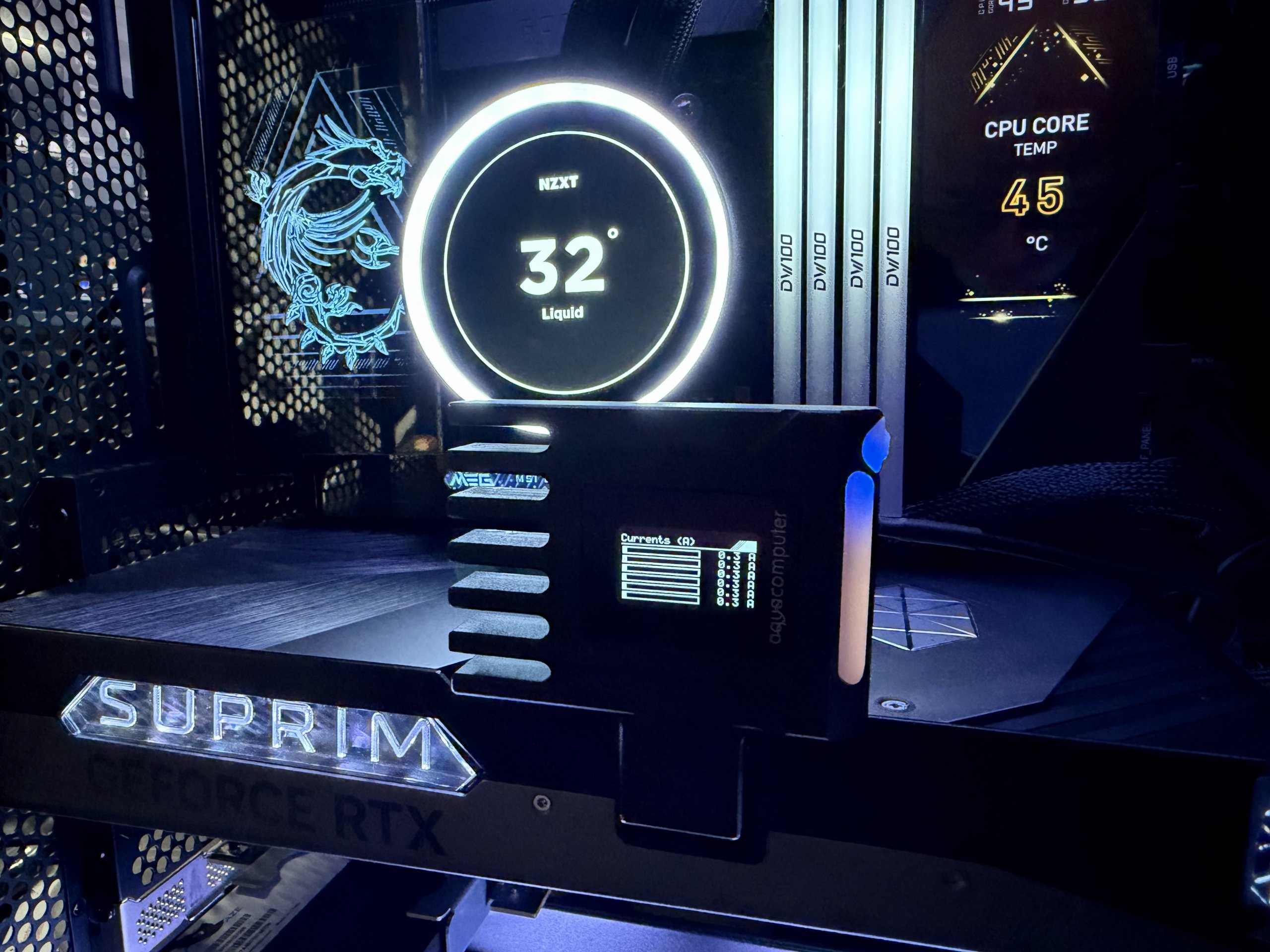
But none of this diminishes our respect for aqua computer, on the contrary. Because while others are tinkering with the symptoms, in Gleichen they simply took a shovel and uncovered the whole root without digging a grave for the hideous plunger. Unfortunately, this connector has come to stay. Corona vibes… The AMPINEL is not just another attachment or adapter, but a complete concept: It monitors the already borderline limits of the hot 12V connectors with the usual German thoroughness, implements a smart load balancer, which NVIDIA itself preferred to leave under the table for cost reasons and space constraints, and can even elegantly shut down the 3D load on the computer in the event of imminent overload without sending the entire system into a coma.

In the end, we are left with a piece of technology that is not only reassuring, but also shows how something quite sensible can be built from the chaos of a failed specification. The AMPINEL is a device that lets you sleep peacefully again while it does in the background exactly what the big players would actually have been responsible for themselves. And, by the way, with a very lasting wink to Jensen and his Strompeitsche, which probably unintentionally laid the foundation for an entire accessories industry. Incidentally, the reason why I’m already showering the part with praise in the intro is because the good piece has now shown me more than once the finite nature of the existence of a graphics card if you don’t actively take countermeasures. Today’s test shows you the prototype, which I have been using almost constantly over the last few weeks and which will be available to all my fellow sufferers from the beginning of November. We’ll talk about the price at the end and I’m sure one or two readers will be shocked because it will be cheaper than the intro might suggest.
What is the AMPINEL actually?
A load balancer like the one in the AMPINEL is more than just a measuring device for voltage and current. It plays an active role in distributing the load to the various rails and plug lines. Its special feature is that it not only reacts when limit values are exceeded, but also ensures an even load in advance. This prevents hotspots in the connector and reduces the thermal load on individual contacts. The MOSFETs are at the heart of such a circuit. Here, the selection directly determines the efficiency, as every additional milliohm of RDS(on) is immediately converted into heat at high currents. Accordingly, very low-resistance, fast MOSFETs with high current-carrying capacity are used, whose power loss remains within acceptable limits even under continuous load. A low gate resistance and optimized control are mandatory in order to keep switching losses low and ensure stable behaviour. The total resistance at idle is only 5 milliohms per string, which is a very good value for such a solution.
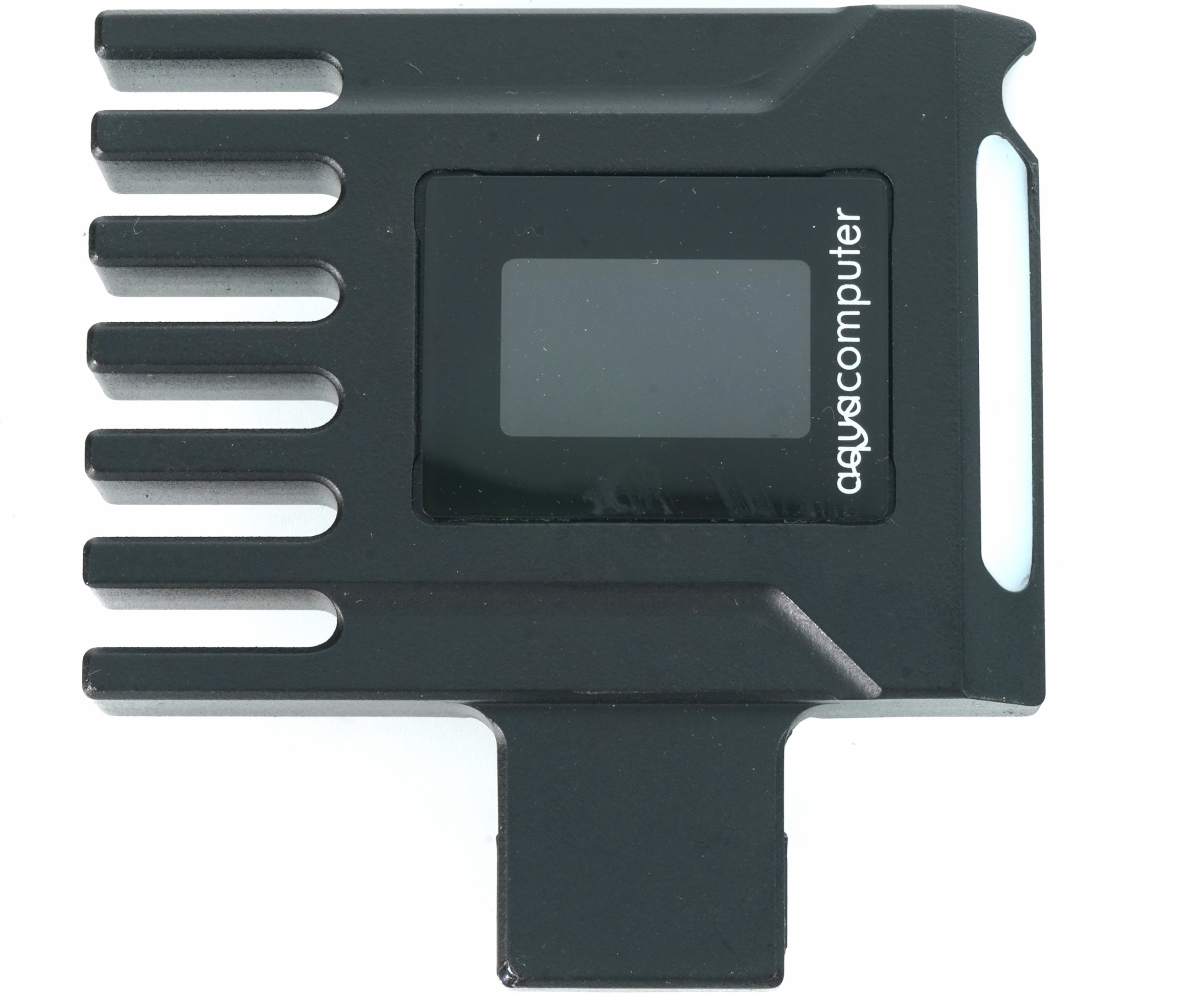
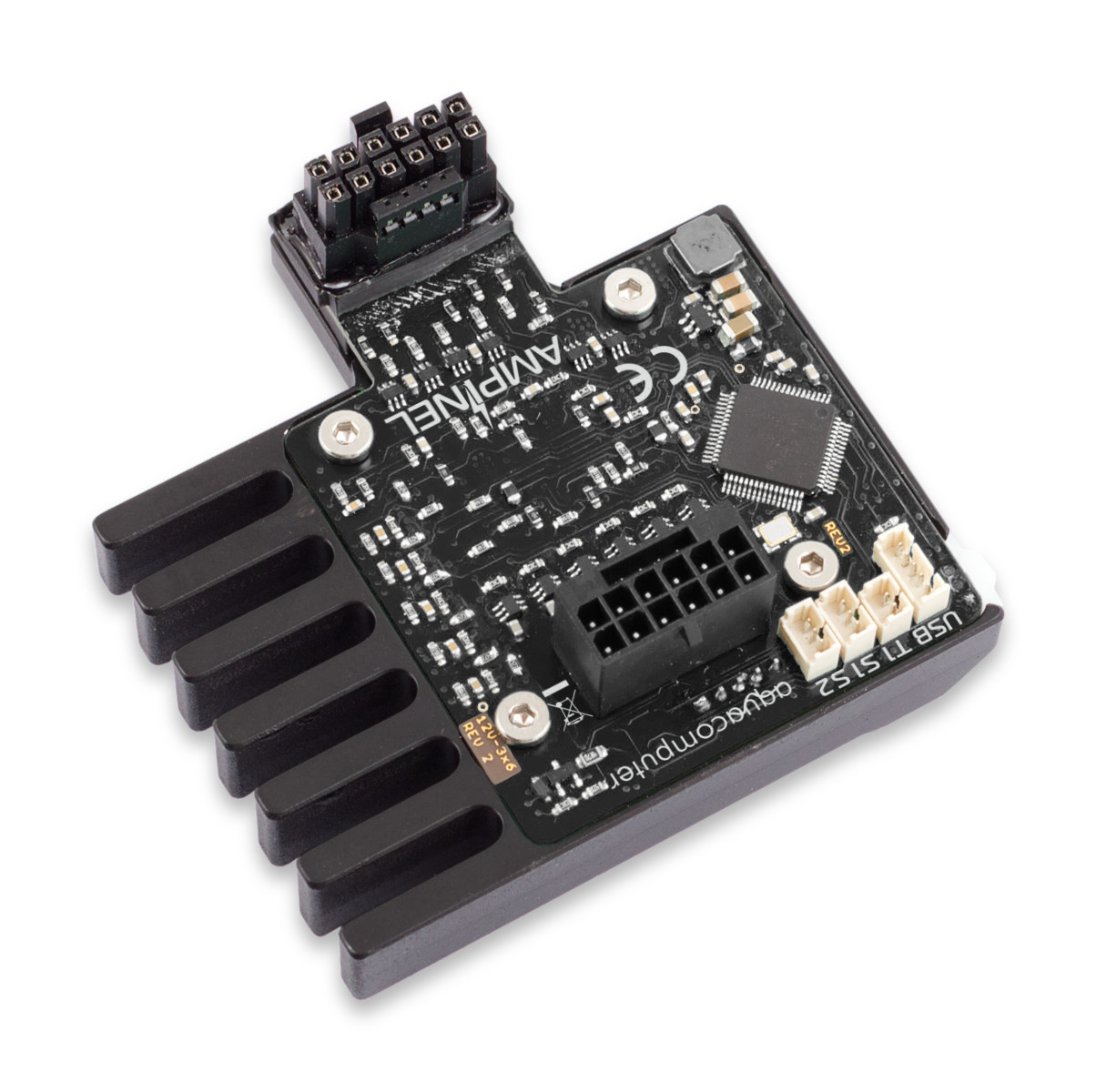
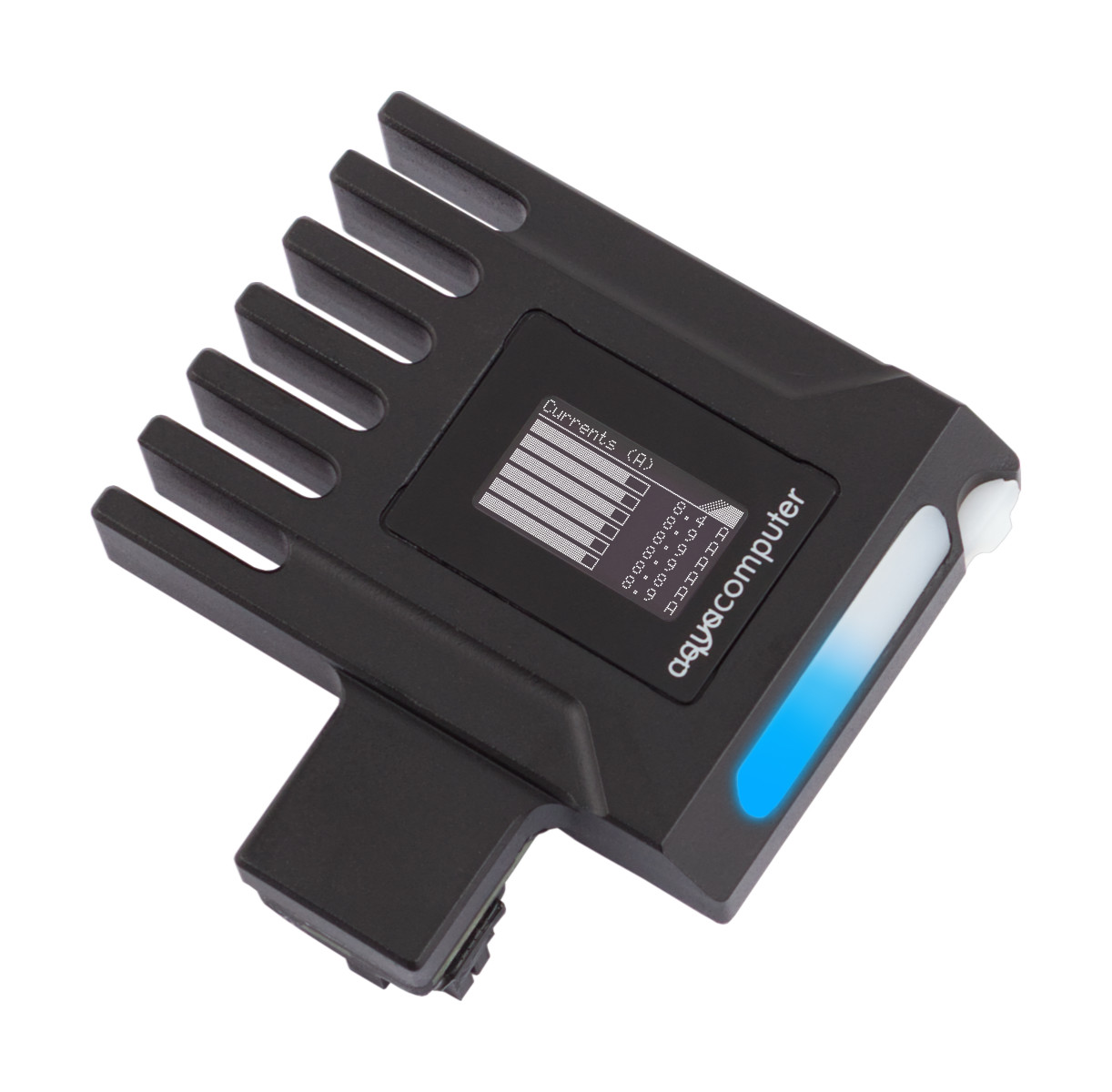
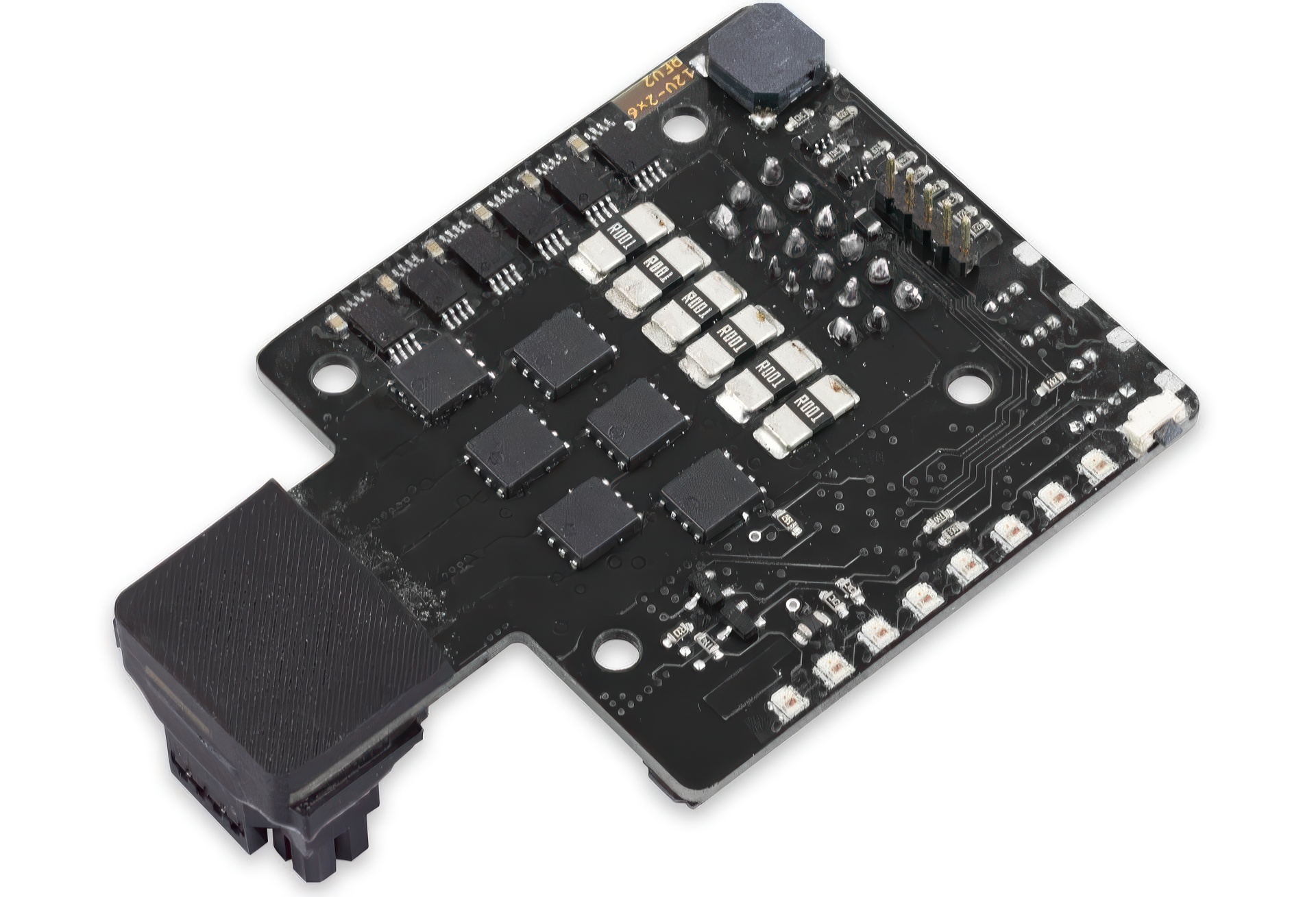
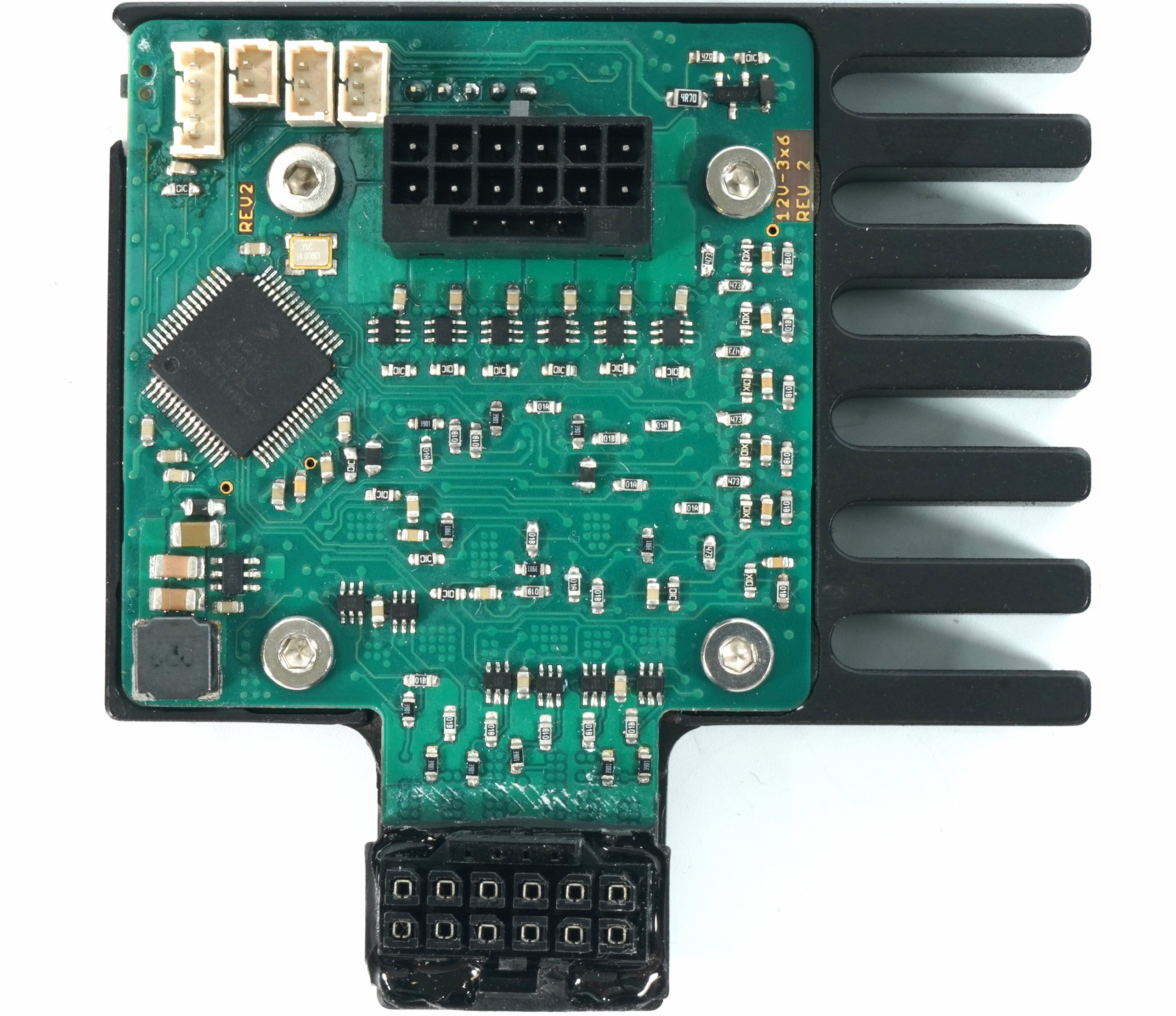
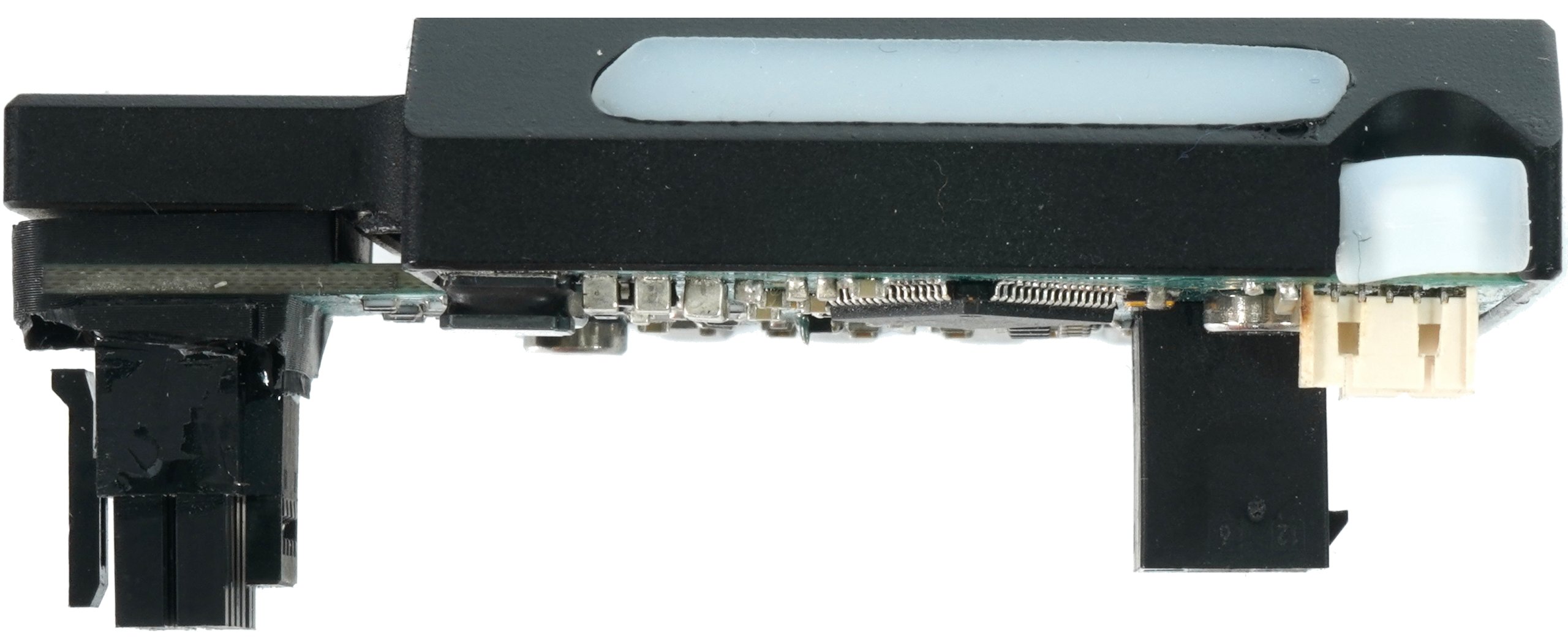
However, the hardware alone does not make the AMPINEL unique. Only the combination with a fast MCU ensures that a power distributor becomes an intelligent manager. Where other systems only record and forward measured values, here it is possible to react in real time: Current paths can be switched dynamically, load profiles can be adapted to the thermal situation and, in an emergency, a controlled reduction of the GPU load intervenes instead of simply switching off hard. This close integration of power MOSFETs and MCU takes the load balancer beyond the usual level. Instead of mere sensor technology, an active control element is created that specifically mitigates the weak points of the 12V connector and at the same time makes operation more stable and safer.
Functions, features and technical data
| Property / Function | Description / Value |
|---|---|
| Current balancing | Active distribution and reduction of currents on all 6 lines of the 12VHPWR plug |
| Monitoring | Continuous measurement of current, voltage and temperature at plug connections and electronics |
| Alarm configuration | Multi-level: visual, audible, software termination, PC shutdown, emergency shutdown of the GPU power supply |
| Operation | OLED display (128×64 px), one-button control, integrated buzzer (approx. 85 dB) |
| RGBpx lighting | 8 integrated LEDs, effects for operating states, alarms and user configuration |
| Software support | Supported by aquasuite (Windows): Data logger, overview pages, virtual sensors, profiles |
| Profiles | Manual or automatic switching, up to four profiles |
| Playground | Virtual software sensors, output actions, global profiles, hotkeys |
| aquasuite web | Data export, import and publication via Aqua Computer Server |
| Compatibility | Support of HWiNFO and AIDA64 via shared memory |
| Firmware | Update and language selection via aquasuite |
| Security functions | Integrated protection mechanism up to complete shutdown of the GPU power supply |
| Materials | Aluminum, silicone, PMMA, epoxy resin |
| Dimensions | 72 × 75 × 30 mm |
| Weight | approx. 100 g |
| Supply voltage | 12 V DC ±5 %, max. 0.5 A |
| Maximum output power | 650 W |
| Maximum power loss | 10 W |
| Ambient temperature | 10-40 °C (non-condensing) |
| Audible alarm | Buzzer, approx. 85 dB |
| Lighting | 8 digitally controlled RGB LEDs |
| Interfaces | USB 2.0, 2× signal output, 1× temperature input |






















333 Antworten
Kommentar
Lade neue Kommentare
Moderator
Veteran
Urgestein
Urgestein
1
Urgestein
Urgestein
Urgestein
Veteran
1
Mitglied
Urgestein
1
Urgestein
Neuling
1
Urgestein
1
Veteran
Alle Kommentare lesen unter igor´sLAB Community →