















Today I’m comparing two thermal pastes that keep popping up on social networks under different trade names, namely the CAYOM CA-4 and the Z980 from Boligo and Boligao respectively. Both products are in the lower price range and are mainly sold via international online platforms. I base my assessment exclusively on my own measurements, as experience has shown that many of the performance data listed on packaging and product pages cannot be verified or are simply nonsense.
 |
 |
Known information about CAYOM and Bolig(a)o
The official CAYOM homepage lists the company as a supplier of various PC accessory products, including thermal conductors, pads and simple cooling components. No technical background on the material origin or the company’s own production is provided there. CA-4 is described as a generic silicone paste with ceramic filler, without any reliable information on filler type, particle size distribution or testing methodology. I can therefore only conclude that CAYOM appears as a trademark for low-priced thermal materials, while there is no reliable information about the actual production.
Boligo or Boligao has a similar appearance. The name is mainly used by Chinese resellers who offer a wide range of PC accessories. An official company presence with technical documentation, production details or material tests is not apparent. The Z980 is often advertised with high thermal conductivity values, but there is no primary source that would support such a specification according to recognized test standards. The origin of the paste can therefore not be verified.
What you get with both: Unboxing and scope of delivery
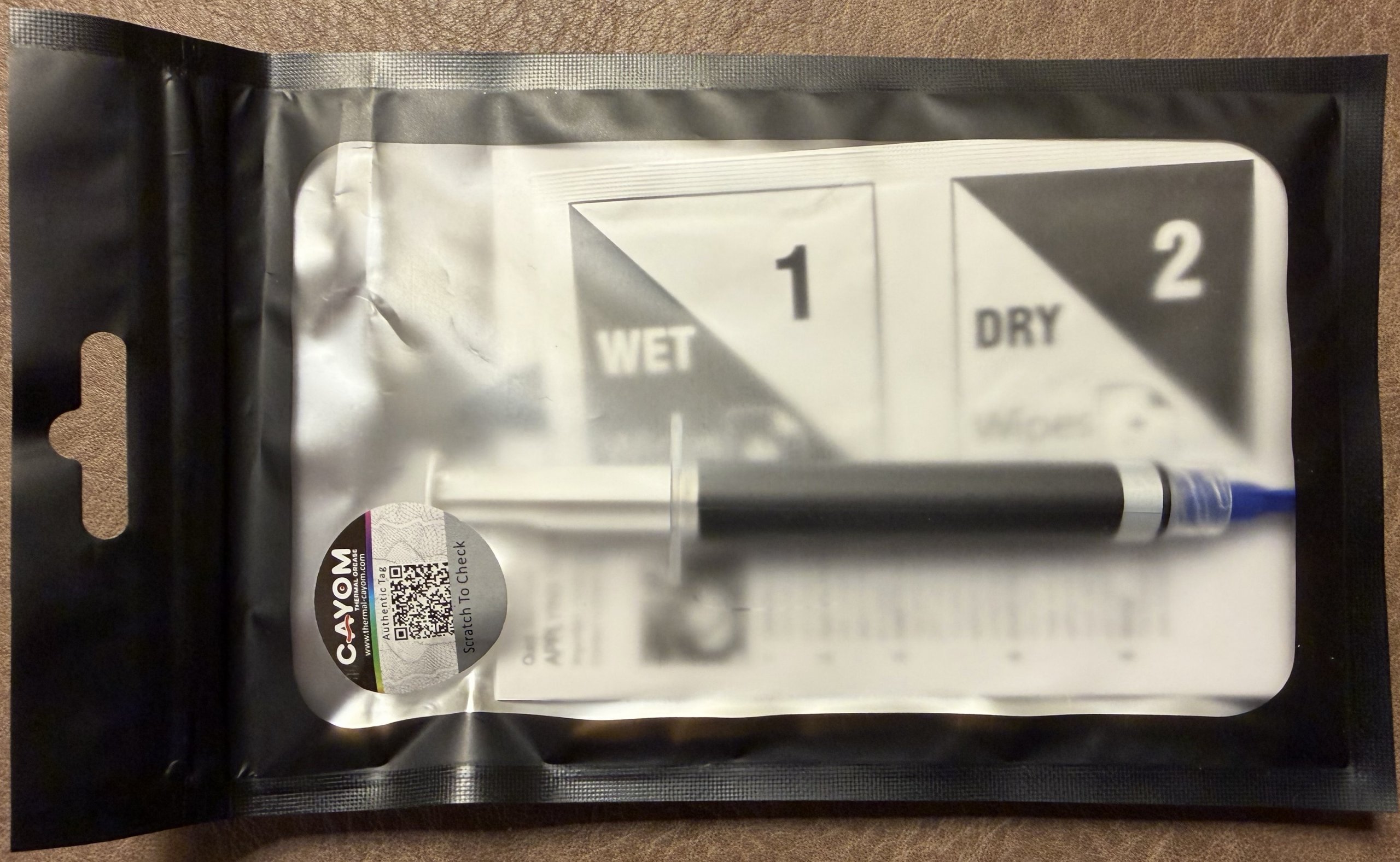
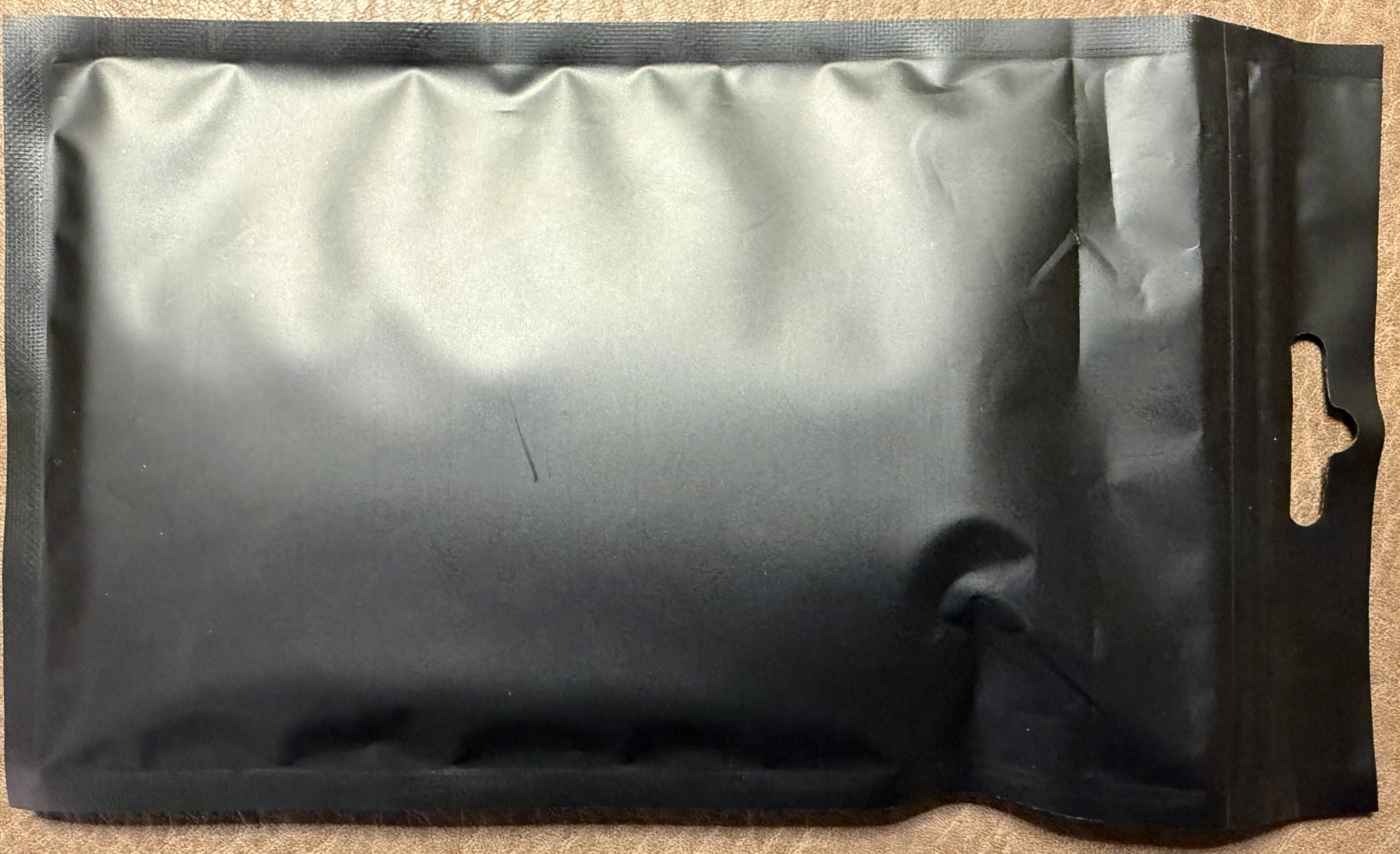
I’ll start with the CA-4, whose packaging is simple and functional. The paste is supplied in a matt black plastic bag that is sealed on both sides and has a sturdy Euro hole opening. The front has a semi-transparent viewing window that provides a view of the syringe, the enclosed cleaning wipes and the tool. The authenticity seal with QR code and scratch-off field, which CAYOM uses as a security feature, is striking. The back remains completely opaque and free of any further information, which reduces the origin and contents to the bare essentials.
|
 |
Once opened, a complete, albeit very simple, accessory pack is revealed. It contains two cleaning cloths, one wet and one dry, as well as a small plastic spatula. The enclosed quick guide explains the basic steps of application, but only in English and without any technical details about the paste itself. The syringe is relatively large and has a black label with the designation CA-4 and the filling quantity of 4 grams. The protective cap and plunger are made of inexpensive plastic, but serve their purpose.
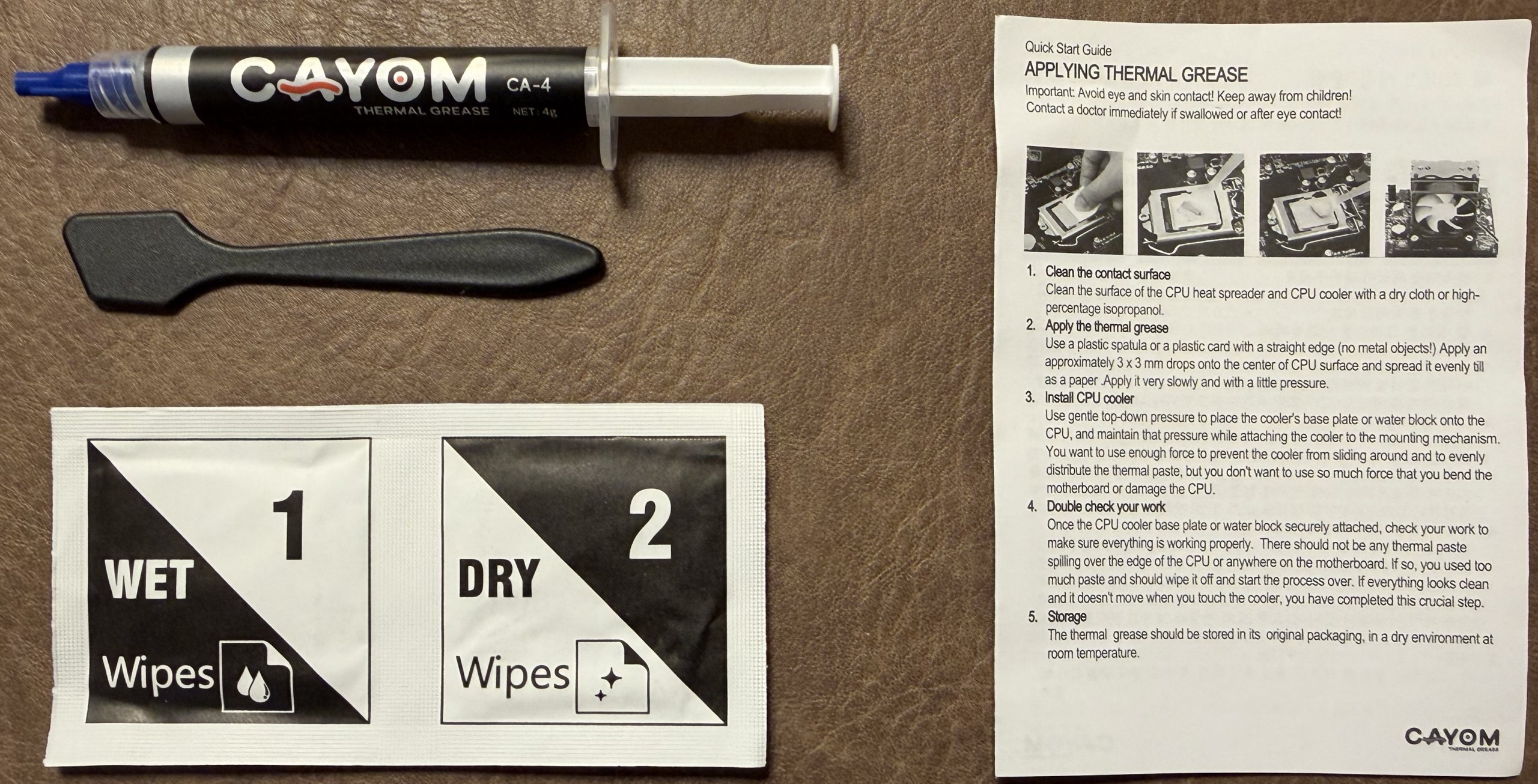
The overall impression is that of an economically packaged product that manages without superfluous presentation and concentrates primarily on the provision of the paste itself. There is a complete lack of information on material properties or safety-relevant data, which is in keeping with the otherwise very generic product line.
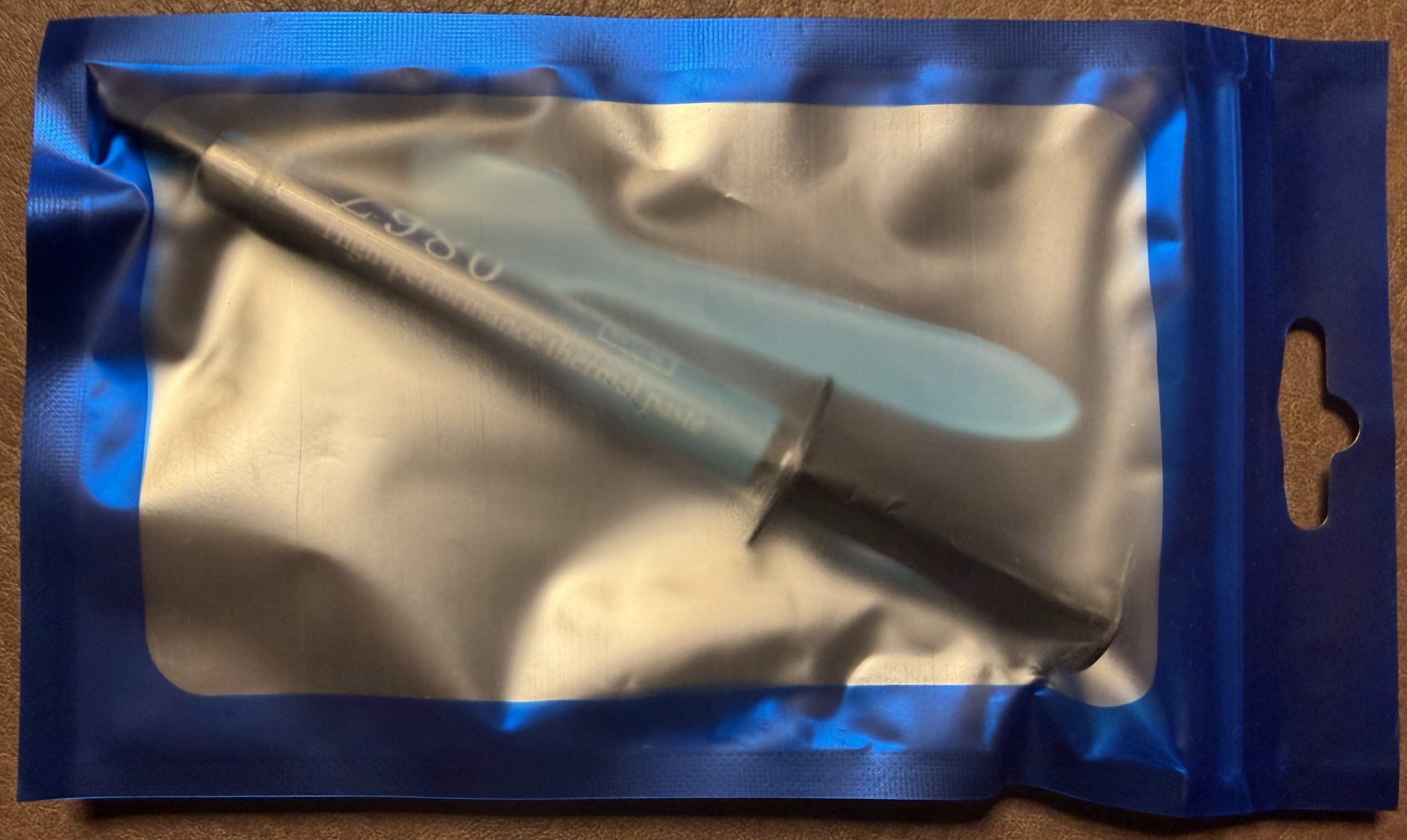
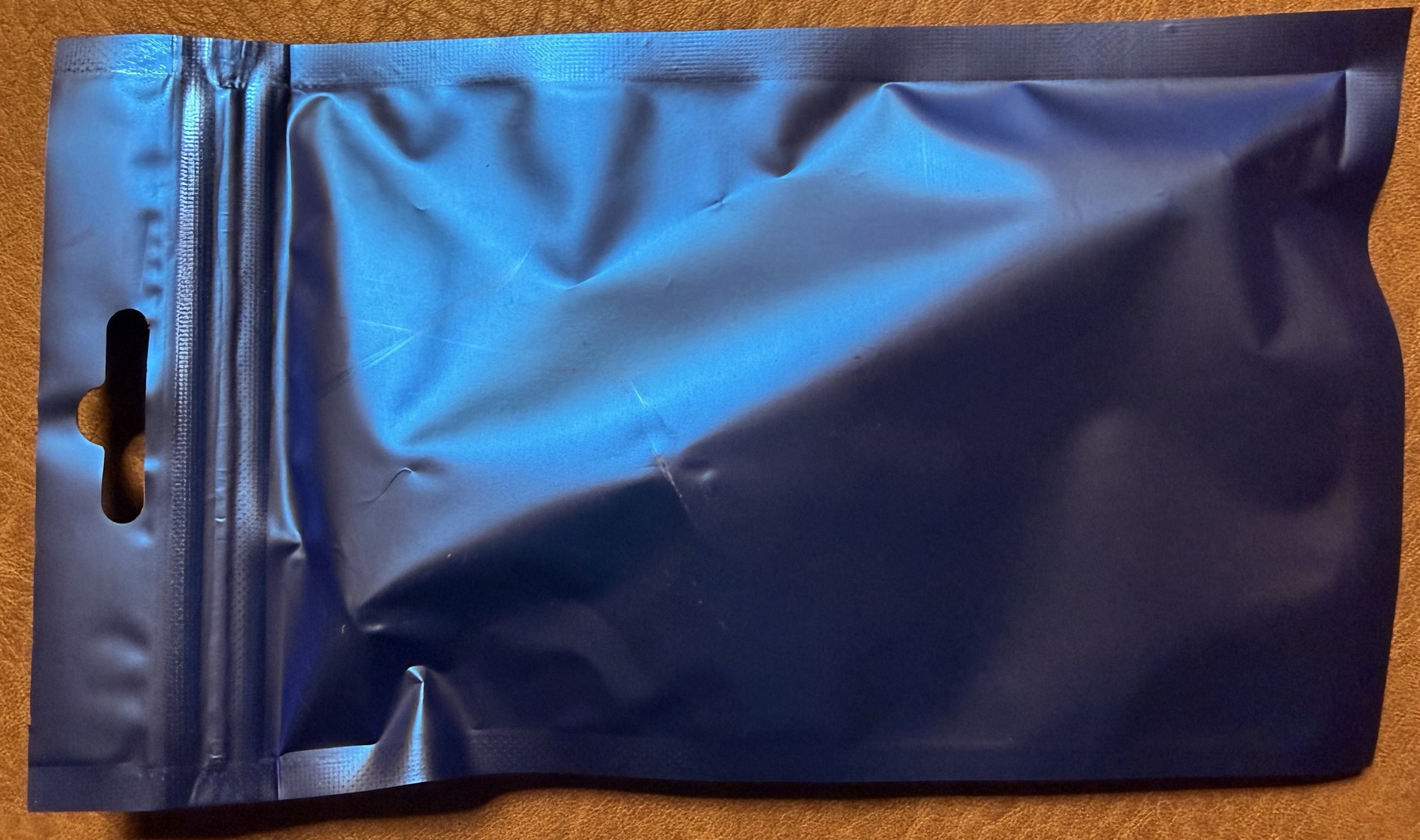
The Z980 is supplied in blue plastic packaging, which is similar in design to the CAYOM packaging, but without the authenticity seal. The front also consists of a semi-transparent film through which the syringe and a simple spatula can be seen. The back contains no information, labels or production instructions, further reinforcing the impression of a generic OEM product.
|
 |
Inside there is only the syringe with 4 grams of paste and a small, thin plastic spatula. Cleaning wipes or instructions are not included. The syringe is provided with a blue and silver banderole which only states the name Z980 and the filling quantity. There is no technical description or manufacturer’s details. The plastic of the syringe appears somewhat softer and less high-quality than the CAYOM version, but remains functional. The cap is transparent, the plunger black, which also indicates simple standard components.
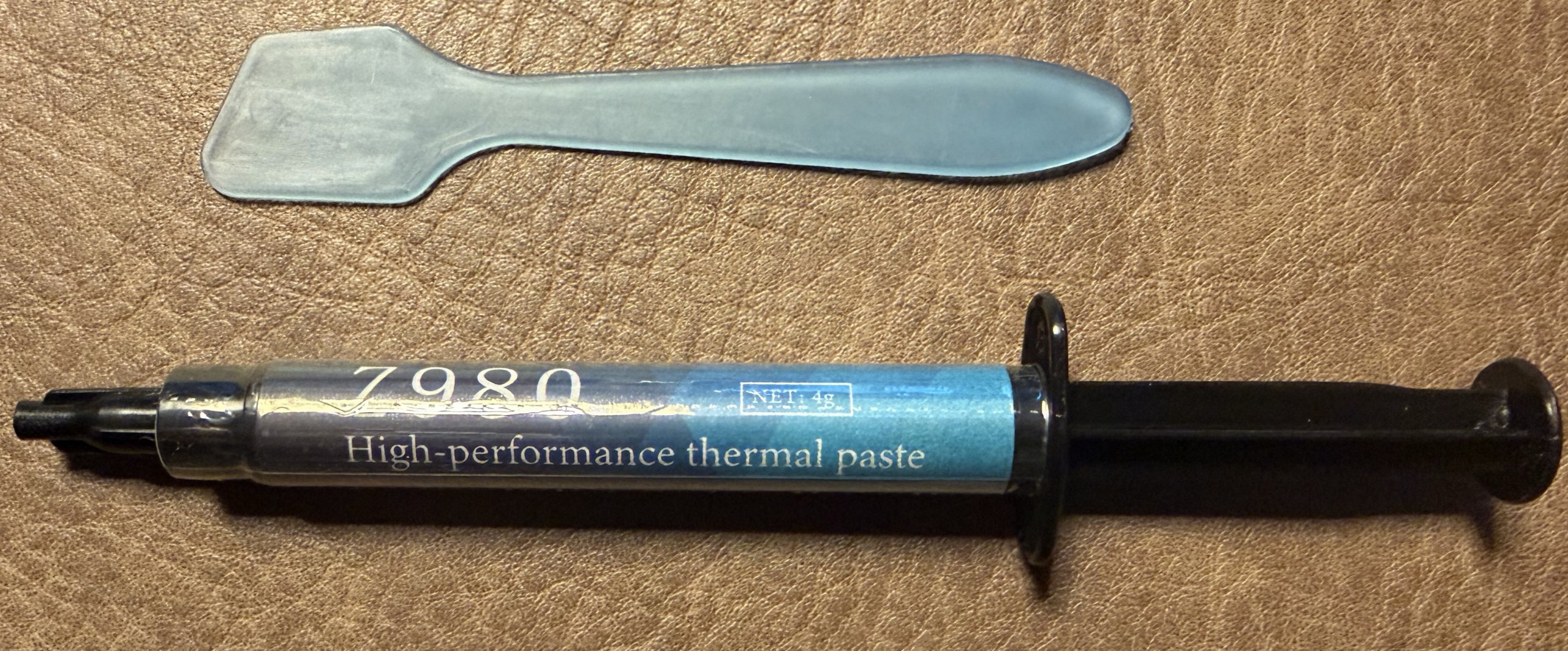
Overall, the unboxing gives a very minimalist impression. The packaging protects the paste adequately, but appears much less structured than the CA-4. The lack of information on the manufacturer, batch or application underlines the previously given assessment that the Z980 is probably a generic commercial product without proven quality control.
Measurements and performance comparisons
My own tests will show in a moment that both pastes achieve a perfectly usable thermal resistance in the moderate load range. The measurement results are close to each other, which suggests classic silicone greases with oxide ceramic filling. The layer thicknesses remain stable and processing is unproblematic, which is why they are well suited for typical desktop CPUs with heatspreaders. I was unable to observe any abnormalities in terms of immediate pump-outs or significant changes in viscosity during the short test window. The requirements increase significantly in the GPU area. Cards with very high power consumption, such as a GeForce RTX 5090, generate mechanical and thermal loads that I would not trust these pastes to withstand without documented industrial quality control. Below these extreme ranges, however, the picture remains clean. For everyday CPU systems or medium-performance GPUs, both pastes can serve as inexpensive replacement materials. However, if you expect maximum stability under high long-term loads, you should choose products whose material basis, standard tests and production chains are clearly documented. The pastes tested here do not meet these requirements, but deliver a solid performance in practical scenarios.
If there happens to be a chemist among the readers or someone who has close connections to a suitable laboratory, I would of course be very happy to hear from them.
It remains to be seen whether there is a considerable gap between the advertising promises and the physical reality. And that is precisely why we now have to measure the whole thing and compare the two pastes!
| Material analysis and microscopy | Basic knowledge | |
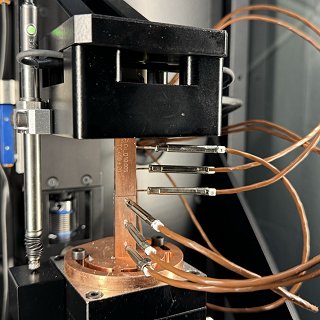 Here you can find out why effective thermal conductivity and bulk thermal conductivity can be completely different in practice, what role the contact resistance between the surfaces and the paste plays and how thermal paste can be measured accurately. There is also a detailed description of the equipment, the methodology and the error tolerances. Here you can find out why effective thermal conductivity and bulk thermal conductivity can be completely different in practice, what role the contact resistance between the surfaces and the paste plays and how thermal paste can be measured accurately. There is also a detailed description of the equipment, the methodology and the error tolerances. |
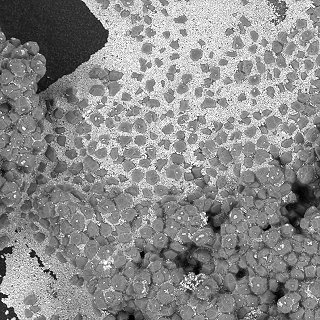
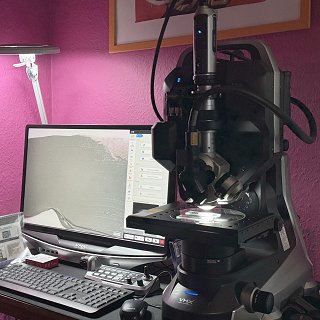 You will learn how laser-induced plasma spectroscopy works and the advantages and limitations of the measurements. There is also high-resolution digital microscopy and analysis of particle sizes. This information is also used to estimate the long-term stability of a paste. You will learn how laser-induced plasma spectroscopy works and the advantages and limitations of the measurements. There is also high-resolution digital microscopy and analysis of particle sizes. This information is also used to estimate the long-term stability of a paste. |
 Anyone who has always wanted to know what is or is not in a paste and how these pastes are produced will find what they are looking for here. The basic article provides a better understanding of what is often sold for far too much money and sometimes with adventurous promises. Anyone who has always wanted to know what is or is not in a paste and how these pastes are produced will find what they are looking for here. The basic article provides a better understanding of what is often sold for far too much money and sometimes with adventurous promises. |

























7 Antworten
Kommentar
Lade neue Kommentare
Urgestein
1
Urgestein
1
Urgestein
1
Veteran
Alle Kommentare lesen unter igor´sLAB Community →